
Have you recently found yourself asking, “Do I need counselling?” Life’s challenges can leave us feeling overwhelmed, and seeking support is a proactive step toward clarity and well-being. Counselling provides a safe and confidential space to explore emotions, develop coping strategies, and regain balance. If you’re unsure whether counselling is right for you, this guide can help.
If you’re feeling overwhelmed, struggling with emotions, or facing challenges you can’t manage alone, counselling may be beneficial. It provides a safe and supportive space to address issues like stress, anxiety, grief, relationship difficulties, or major life transitions. Asking questions like, “Am I feeling distressed?” or “Do I need help finding clarity or coping strategies?” can help determine if counselling is right for you.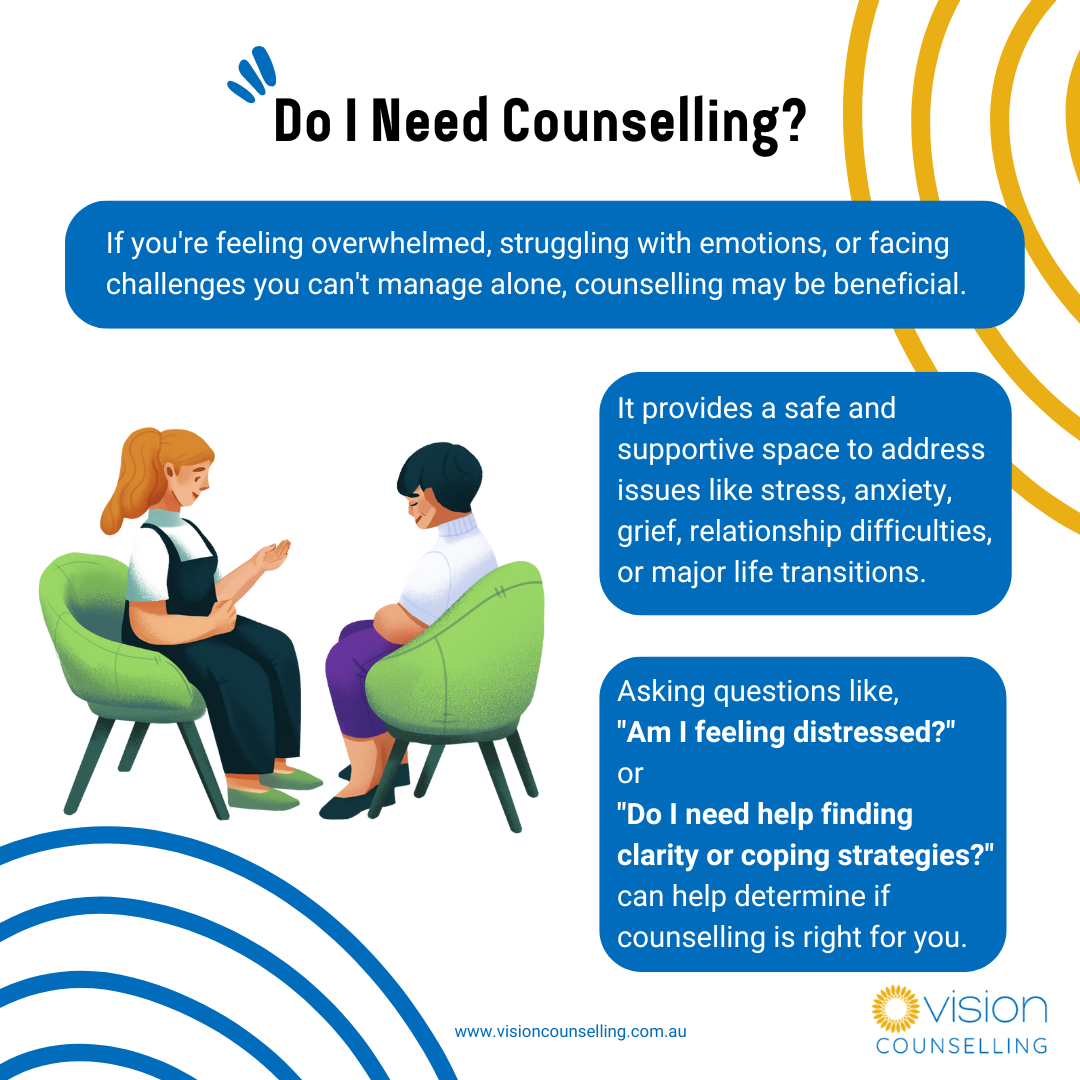
When Should You Consider Counselling?
Signs You Might Benefit from Counselling
Joyce Breasure, past president of the American Counseling Association, highlights key indicators that counselling may be beneficial. Ask yourself:
- Do I spend more days feeling unhappy than content?
- Am I struggling to sleep at night due to stress or worry?
- Am I providing care for a loved one and feeling overwhelmed?
- Have I recently lost someone or something significant, such as a job?
- Am I dealing with a chronic or acute medical condition?
- Do I feel unable to prioritize what’s most important in my life?
- Am I finding it hard to manage daily stress or emotions?
If you answered “yes” to any of these questions, counselling could provide the tools and support you need to navigate these challenges.
Learn how counselling can support your emotional well-being through our Individual Counselling Services.
Why Consider Counselling?
Counselling offers professional support for a wide range of situations that cause emotional distress. According to the Australian Psychological Society, common reasons for seeking counselling include:
- Anxiety, depression, and other mental health challenges
- Family and relationship difficulties
- Substance use or addiction issues
- Coping with significant life transitions
- Grieving the loss of a loved one
- Work-related stress or career changes
- Social and emotional challenges related to disability or illness
Over 45% of Australians will experience a mental health condition in their lifetime, highlighting the importance of accessible mental health services (Beyond Blue).
Explore our Relationship Counselling Services to address family or partnership concerns.
Questions to Ask Yourself
If you’re unsure whether to seek counselling, these questions can help clarify your decision:
- Do I feel like I’m in a constant state of crisis or distress?
- Am I struggling to manage emotions like anger, sadness, or fear?
- Do I feel overwhelmed by changes in my life?
- Would I benefit from a safe and confidential space to share my feelings?
- Do I need help finding the right resources or services for my situation?
Answering “yes” to any of these questions suggests that counselling could be beneficial. Remember, seeking support is not a sign of weakness—it’s a step toward growth and healing.
How Counselling Helps
Counselling equips individuals with practical tools and emotional support to address their challenges. Here’s how it helps:
1. Provides Emotional Clarity
Talking to a counsellor helps untangle complex emotions and provides clarity during overwhelming situations.
2. Offers Coping Strategies
Counsellors teach techniques such as mindfulness, cognitive reframing, and stress management to help clients cope with stress and anxiety.
3. Builds Resilience
Through counselling, individuals can develop resilience to handle future challenges more effectively.
What to Expect from Counselling
Counselling sessions are tailored to your unique needs and goals. In a typical session, you can expect:
- A safe, confidential space to express your thoughts and feelings.
- Professional guidance to identify and address the root causes of your concerns.
- Practical tools and techniques to manage emotions and improve well-being.
For more information on what happens in a session, visit our what happens in a counselling session page.
Making the Decision to Seek Counselling
If you’re feeling uncertain about whether to seek counselling, remember that reaching out for help is a proactive and empowering step. Whether you’re managing stress, navigating a significant life change, or looking for support with your mental health, counselling can provide the guidance and tools you need to thrive.
Conclusion
If you’ve been asking yourself, if you need to go to counselling the answer might already be clear. Counselling is a powerful resource for navigating life’s challenges, improving mental health, and fostering personal growth. At Vision Counselling, we’re here to provide compassionate and professional support tailored to your needs.
Take the first step today—contact us to book your session and start your journey toward clarity, balance, and well-being.

