
Starting counselling can feel overwhelming, especially if you’re unsure what to expect. Understanding what happens in your first counselling session can help ease any anxiety and set the stage for a positive experience. Whether you’re seeking support for anxiety, relationship challenges, or personal growth, the first session is about building trust and creating a plan tailored to your needs.
In your first counselling session, you’ll meet your counsellor, discuss your concerns, and set goals for therapy. The session is a safe and supportive space to share as much as you feel comfortable with. Your counsellor will guide the conversation, ask questions to try and understand your situation, and explain how future sessions will help you work toward your goals.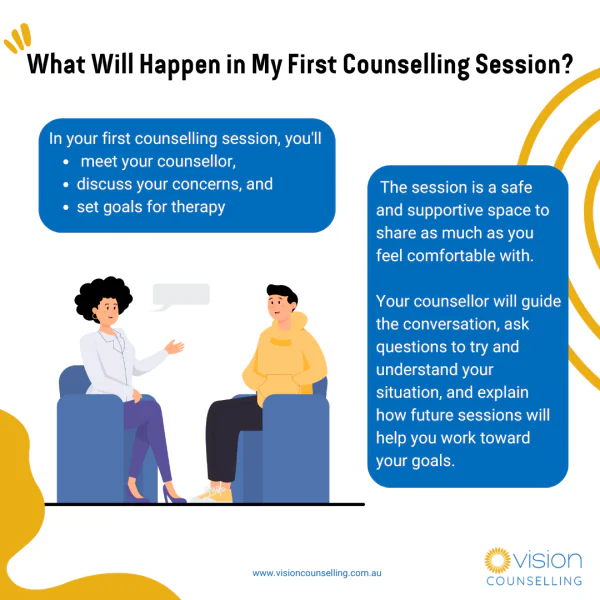
What to Expect in Your First Counselling Session
Your first counselling session is an opportunity to establish a connection with your counsellor and share the concerns that brought you to therapy. Here’s what you can expect:
1. Getting to Know Your Counsellor
The session typically begins with introductions. Your counsellor will explain their role, their approach to therapy, and the confidentiality policies they adhere to. This is your chance to ask any questions about their qualifications or experience.
Learn about our professional team of counsellors on the Vision Counselling Therapists page.
2. Discussing Your Concerns
You’ll be encouraged to talk about why you’re seeking counselling and what you hope to achieve. This might include:
- Challenges you’re currently facing
- Emotional or physical symptoms
- Personal goals for therapy
It’s normal to feel unsure about what to say. Your counsellor will guide the conversation to help you feel comfortable sharing your thoughts.
3. Setting Goals and Expectations
Together, you and your counsellor will set realistic goals for therapy. This could involve improving communication skills, managing anxiety, or finding strategies to cope with stress. Establishing clear objectives ensures that sessions remain focused and productive.
Research shows that clients who set clear goals in counselling are 40% more likely to achieve positive outcomes (American Psychological Association).
4. Exploring Your Background
To gain a better understanding of your situation, your counsellor may ask about your:
- Personal history and life experiences
- Current relationships
- Work or school environment
- Physical and mental health
This helps the counsellor tailor their approach to your unique circumstances.
Common Concerns About Your First Session
It’s natural to feel nervous or uncertain before your first counselling session. Here are answers to some common concerns:
Will I Have to Share Everything in the First Session?
No, the first session is about starting the conversation. You can share as much or as little as you feel comfortable with. Over time, as trust builds, you may feel more open to discussing deeper issues.
What if I Don’t Feel a Connection with My Counsellor?
A good fit between client and counsellor is essential for successful therapy. If you don’t feel comfortable after a session or two, it’s okay to discuss this with your counsellor or seek a different professional.
Why the First Session Matters
The first counselling session sets the tone for your therapeutic journey. It’s a chance to:
- Build rapport with your counsellor
- Clarify your goals for therapy
- Feel heard and understood in a safe, nonjudgmental space
Preparing for Your First Counselling Session
To make the most of your session, consider these tips:
- Reflect on Your Goals: Think about what you’d like to achieve through counselling.
- Be Honest: Share your feelings and concerns openly.
- Ask Questions: Clarify anything you’re unsure about, such as the counsellor’s methods or session structure.
The Importance of Professional Support
Counselling is a proactive step toward emotional well-being and personal growth. Whether you’re managing stress, navigating a life transition, or seeking clarity in relationships, professional support can make a significant difference.
Statistic: A meta-analysis of therapy outcomes found that over 75% of clients experience significant improvement after their first few sessions (National Institutes of Health).
Conclusion
Your first counselling session is an important step in your journey toward emotional health and personal growth. It’s a chance to explore your concerns, set meaningful goals, and start building a path toward a more balanced and fulfilling life.
If you’re ready to take the first step, contact Vision Counselling today to book your initial session. Let’s work together to achieve your goals.

