
Trauma can leave a profound impact on the mind and body, often manifesting as stress, anxiety, or physical symptoms. Somatic therapy offers a unique approach by focusing on the connection between the mind and body to address unresolved trauma. But what exactly is somatic therapy, and how does it help those recovering from trauma? Let’s explore its purpose, techniques, and benefits.
Somatic therapy is a body-focused approach to healing trauma that integrates physical techniques, such as breathing exercises and body awareness, with traditional talk therapy. It aims to address the physical effects of trauma stored in the body, regulate the nervous system, and release pent-up emotions. Somatic therapy is particularly effective for conditions like PTSD, anxiety, and chronic pain, providing holistic healing and empowering individuals to reconnect with their bodies.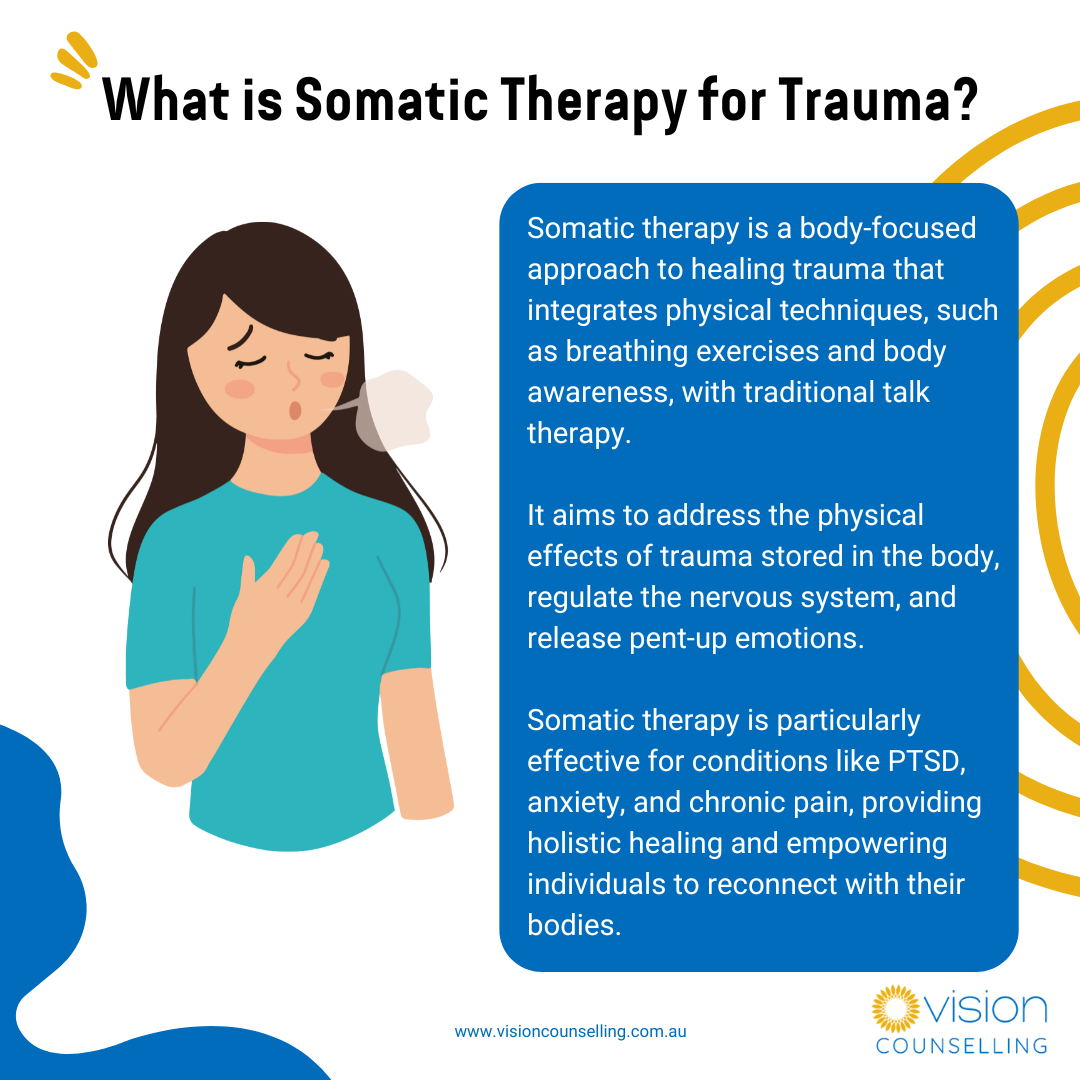
What is Somatic Therapy?
Somatic therapy, also known as somatic experiencing, is a body-centered approach to healing trauma. It integrates traditional talk therapy with physical techniques such as breathing exercises, body awareness, and movement to release trauma stored in the body. Unlike traditional therapies that focus primarily on thoughts and emotions, somatic therapy acknowledges the body’s role in processing and healing from traumatic experiences.
Learn more about the trauma counselling process.
How Does Trauma Affect the Body?
Trauma is more than just a psychological event; it can have lasting physical effects. According to the American Psychological Association, trauma can dysregulate the nervous system, causing symptoms such as heightened stress responses, physical tension, and chronic pain (APA). Common physical effects of trauma include:
- Muscle tension
- Difficulty relaxing
- Digestive issues
- Fatigue or restlessness
- Increased heart rate
Somatic therapy addresses these physical manifestations by helping individuals reconnect with their bodies in a safe and supportive environment.
How Does Somatic Therapy Work?
Somatic therapy helps individuals process and release trauma by focusing on physical sensations and the body’s natural capacity for healing. Here’s how it works:
1. Cultivating Body Awareness
Somatic therapy begins by guiding individuals to tune into their physical sensations, such as tightness, tension, or numbness. This heightened awareness helps identify where trauma is stored in the body.
2. Regulating the Nervous System
By engaging in calming techniques like deep breathing or gentle movement, somatic therapy helps regulate the autonomic nervous system. This reduces the fight-or-flight response, allowing the body to return to a state of balance.
3. Releasing Stored Trauma
Through guided exercises, individuals learn to safely release pent-up energy and emotions associated with trauma. Techniques like somatic experiencing help complete the body’s natural stress response cycle.
For more information on how somatic therapy regulates the nervous system, visit the Somatic Experiencing Trauma Institute.
What is Somatic Therapy Used For?
Somatic therapy is especially effective for trauma-related conditions but can also address other challenges. Common uses include:
- Post-Traumatic Stress Disorder (PTSD): Somatic therapy helps reduce intrusive thoughts, hyperarousal, and emotional numbness associated with PTSD.
- Anxiety and Depression: By focusing on the body, somatic therapy can help alleviate the physical symptoms of anxiety and depression.
- Chronic Pain and Tension: Trauma often manifests as physical discomfort. Somatic techniques help release tension stored in the body.
- Emotional Dysregulation: Somatic therapy teaches techniques to manage overwhelming emotions and build resilience.
Discover additional techniques for managing anxiety and depression through our Anxiety Counselling Services.
Benefits of Somatic Therapy for Trauma
Somatic therapy offers unique benefits for individuals recovering from trauma:
1. Holistic Healing
By addressing both the mind and body, somatic therapy provides comprehensive care, helping individuals achieve deeper healing.
2. Greater Emotional Resilience
Somatic therapy equips individuals with tools to manage stress and overwhelming emotions, fostering emotional resilience over time.
3. Improved Physical Well-Being
Many clients report reduced physical symptoms, such as chronic pain, headaches, and muscle tension, after engaging in somatic therapy.
4. Empowerment and Self-Awareness
Somatic therapy empowers individuals to reconnect with their bodies, fostering a sense of control and self-awareness.
Studies show that body-focused therapies like somatic experiencing can reduce PTSD symptoms by up to 81% (National Center for PTSD).
Who Can Benefit from Somatic Therapy?
Somatic therapy is suitable for individuals experiencing:
- Trauma from past events such as abuse, accidents, or loss
- Ongoing stress or anxiety
- Chronic pain or unexplained physical symptoms
- Emotional challenges related to grief or life transitions
If you’re unsure whether somatic therapy is right for you, a professional therapist can help assess your needs and recommend an appropriate approach.
Book a consultation with our experienced therapists at Vision Counselling to explore whether somatic therapy is the right fit for you.
Conclusion
Somatic therapy is a transformative approach for healing trauma by addressing the mind-body connection. By cultivating body awareness, regulating the nervous system, and releasing stored trauma, it provides a pathway to recovery that is both effective and empowering.
If you’re ready to explore how somatic therapy can support your healing journey, contact Vision Counselling today. Our compassionate therapists are here to guide you toward a healthier, more balanced life.

