
Eco-anxiety is a growing psychological phenomenon linked to concerns about the environment and climate change. As awareness of global environmental challenges increases, so does the emotional toll it can take on individuals. But what exactly is eco-anxiety, and how does it impact mental health? This article explores the causes, symptoms, and coping strategies for managing eco-anxiety.
What is Eco-Anxiety?
Eco-anxiety is the chronic fear or worry about environmental issues, such as climate change and ecological disasters. It’s not officially classified as a mental health disorder but is recognized as a natural emotional response to growing concerns about the planet’s future. Eco-anxiety can lead to feelings of helplessness, sadness, and stress, affecting both mental and physical well-being.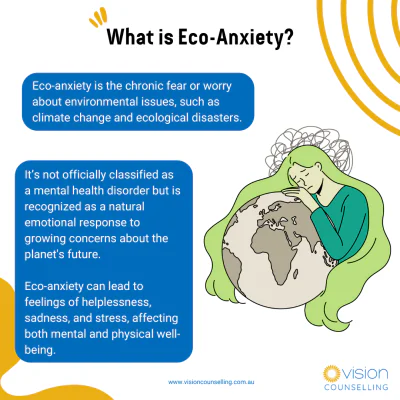
Eco-anxiety, sometimes referred to as climate anxiety, is the chronic fear of environmental catastrophe. While not officially classified as a mental health disorder, it is recognized by mental health professionals as a legitimate emotional response to the climate crisis.
Key Triggers for Eco-Anxiety:
- Frequent exposure to news about climate disasters
- Feeling powerless to make a significant impact
- Concerns about the future for oneself and future generations
If you’re struggling with feelings of anxiety, learn more about managing stress on our Anxiety Counselling Services page.
How Does Eco-Anxiety Affect Mental Health?
The mental health effects of eco-anxiety vary from person to person but can be profound and far-reaching.
Common Symptoms of Eco-Anxiety:
- Emotional Symptoms: Persistent worry, fear, sadness, or guilt about the environment.
- Cognitive Symptoms: Obsessive thoughts about climate change or its impacts.
- Physical Symptoms: Fatigue, difficulty sleeping, or feeling overwhelmed.
- Behavioral Changes: Avoidance of certain activities, hyperfocus on eco-friendly practices, or withdrawing from conversations about the environment.
A 2021 study published in The Lancet found that 59% of young people globally reported feeling “very” or “extremely” worried about climate change (The Lancet).
Who is Most Affected by Eco-Anxiety?
Eco-anxiety can affect anyone but tends to be more common among certain groups:
- Younger Generations: Millennials and Gen Z are particularly vulnerable, as they face the long-term consequences of environmental degradation.
- Environmental Advocates: Individuals deeply involved in environmental work may feel heightened stress from their knowledge and exposure.
- Residents of Affected Areas: Communities directly impacted by climate disasters, such as wildfires or rising sea levels, often experience more acute eco-anxiety.
For more about the impact of climate change on mental health, visit the American Psychological Association.
How to Cope with Eco-Anxiety
While eco-anxiety is a natural response to a real crisis, there are ways to manage it and maintain emotional balance:
1. Educate Yourself
Understanding the science of climate change and the solutions being implemented can help reduce feelings of helplessness. Knowledge empowers action.
2. Take Action
Engaging in positive environmental actions, such as recycling, reducing waste, or advocating for policy changes, can foster a sense of control and purpose.
3. Limit Exposure to Negative News
Constant exposure to climate news can amplify anxiety. Consider setting boundaries around when and how you consume news about the environment.
4. Practice Mindfulness and Stress Management
Techniques like deep breathing, meditation, and yoga can help reduce stress and refocus your energy.
Learn how mindfulness can improve your mental health on our Mindfulness in Therapy page.
5. Seek Support
Talking to a counsellor or therapist can provide valuable tools and strategies for managing eco-anxiety. Sharing your concerns with others who feel the same can also create a sense of solidarity.
For additional resources, visit Climate Psychology Alliance.
The Importance of Acknowledging Eco-Anxiety
Recognizing eco-anxiety is an important step toward addressing its impact on mental health. While it’s a challenging emotional response, it also reflects a deep connection to the planet and a desire for positive change. By acknowledging and managing these feelings, individuals can turn anxiety into action and hope.
Conclusion
Eco-anxiety is a valid emotional response to the ongoing climate crisis, but it doesn’t have to control your life. Understanding its causes, recognizing its symptoms, and implementing effective coping strategies can help you maintain mental balance while staying committed to environmental action.
If you’re struggling with eco-anxiety, Vision Counselling can help. Contact us today to book a session and find the support you need to navigate these complex emotions.

