
Anxiety can feel overwhelming, leaving many people searching for effective ways to manage it. Counselling is one of the most proven methods for understanding and reducing anxiety symptoms. But how exactly does counselling help anxiety? In this article, we explore how counselling provides tools, strategies, and support to help individuals regain control over their lives.
Counselling helps anxiety by providing a safe space to explore feelings, identify triggers, and develop effective coping strategies. Therapies like Cognitive Behavioral Therapy (CBT) challenge unhelpful thought patterns, while techniques such as mindfulness and grounding exercises help manage anxiety in real time. With professional support, individuals can build emotional resilience, reduce symptoms, and regain control over their lives.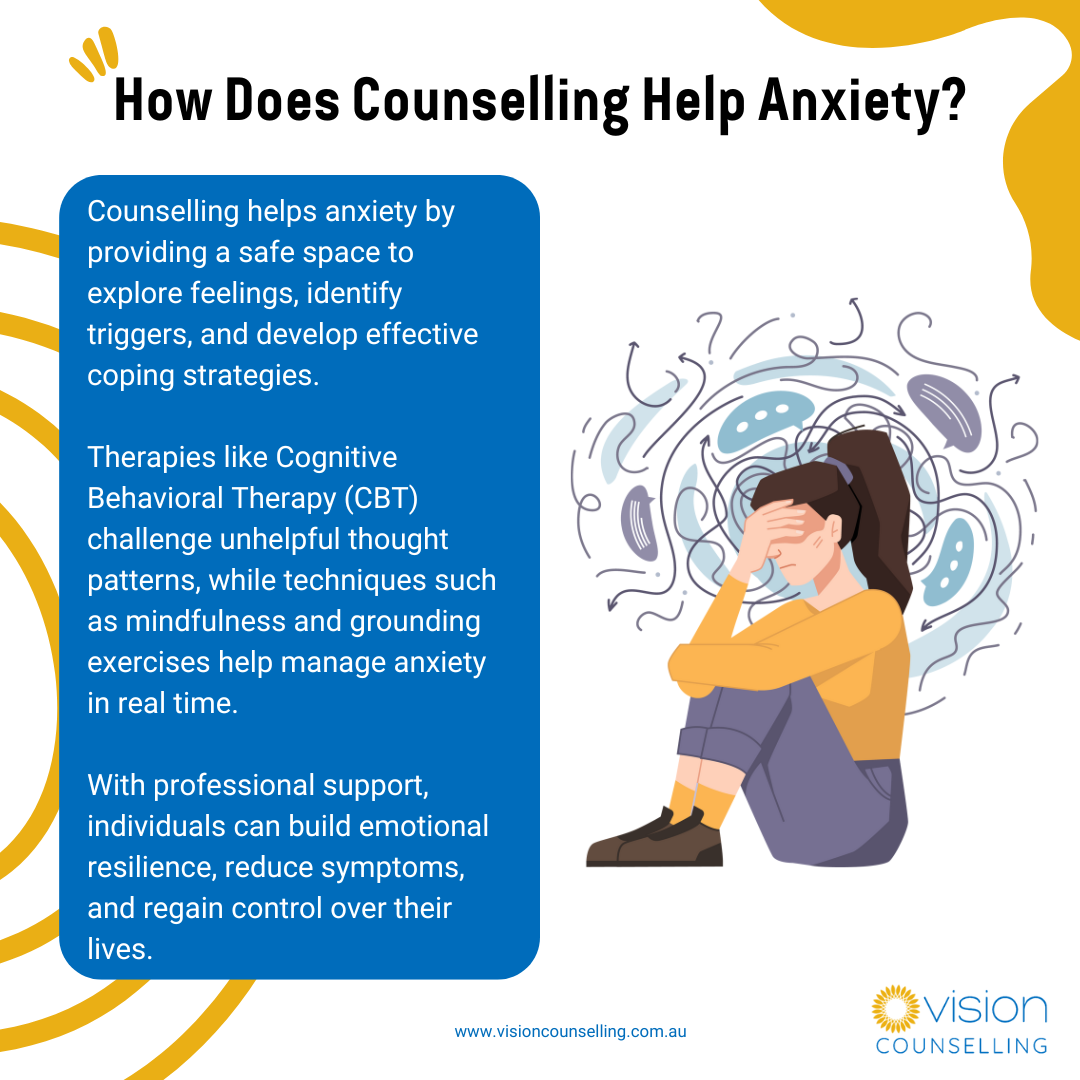
What is Anxiety?
Anxiety is a natural response to stress or danger, but for some, it becomes persistent and interferes with daily life. According to Beyond Blue, anxiety is one of the most common mental health conditions in Australia, affecting over 14% of Australians each year (Beyond Blue).
Common Symptoms of Anxiety:
- Excessive worry
- Difficulty concentrating
- Restlessness
- Sleep disturbances
- Physical symptoms like a racing heart or sweating
If these symptoms feel unmanageable, counseling can help you understand and address the root causes of your anxiety.
Learn more about anxiety and its symptoms on our Anxiety Counselling Services page.
How Counselling Helps Manage Anxiety
Counselling offers a range of therapeutic approaches tailored to each individual’s needs. Here’s how it can help:
1. Identifying Triggers and Patterns
One of the first steps in counselling is identifying the triggers and patterns that contribute to anxiety. Therapists help clients recognize thought processes, behaviors, or environmental factors that exacerbate anxiety. Awareness is the first step toward change.
Example: A therapist may help you notice that checking your phone constantly for emails is increasing your stress and work-related anxiety.
2. Teaching Coping Strategies
Counselling equips clients with practical coping strategies to manage anxiety in real-time. These strategies may include:
- Breathing Techniques: Deep, mindful breathing can help calm the body during moments of acute anxiety.
- Grounding Exercises: Techniques that focus attention on the present moment, such as the “5-4-3-2-1” sensory exercise, reduce overwhelming thoughts.
Studies show that cognitive-behavioral techniques can reduce anxiety symptoms by up to 60%, making it one of the most effective interventions (National Institutes of Health).
3. Cognitive Behavioral Therapy (CBT)
CBT is a widely used evidence-based approach for managing anxiety. It focuses on challenging and changing unhelpful thought patterns and behaviors.
How CBT Helps Anxiety:
- Identifies negative thought patterns (e.g., catastrophizing)
- Teaches individuals to reframe their thoughts into more balanced perspectives
- Provides tools for managing worry and fear
Learn more about CBT’s effectiveness from the American Psychological Association.
4. Building Emotional Resilience
Counselling also focuses on building emotional resilience, helping clients navigate life’s stressors with confidence. Resilience helps reduce the intensity and frequency of anxiety episodes.
5. Providing a Safe Space
Counselling creates a safe and nonjudgmental space where clients can express their fears and anxieties openly. Simply talking about worries can reduce their power and provide a sense of relief.
Research from Psychology Today shows that people who engage in therapy experience a 45-70% improvement in emotional well-being, including reduced anxiety (Psychology Today).
Types of Anxiety Counselling Approaches
Therapists use different approaches to help clients manage anxiety. These include:
Acceptance and Commitment Therapy (ACT)
ACT encourages individuals to accept their anxiety rather than fight it, while committing to actions aligned with their values. It’s particularly effective for chronic anxiety.
Exposure Therapy
Exposure therapy helps individuals confront their fears in a safe, controlled environment, reducing avoidance behaviors and desensitizing anxiety triggers.
Mindfulness-Based Therapy
Mindfulness techniques, such as meditation and body scans, help individuals stay grounded and reduce anxious thoughts.
Explore mindfulness techniques on our Mindfulness in Therapy page.
When to Seek Counselling for Anxiety
If anxiety significantly impacts your daily life, relationships, or ability to work, counselling is a proactive step toward recovery. Signs that you may benefit from counselling include:
- Persistent feelings of worry or fear
- Avoidance of situations due to anxiety
- Difficulty sleeping or concentrating
- Experiencing panic attacks
The Importance of Professional Help
Seeking help from a professional counselor or psychologist can make a significant difference. Therapists are trained to guide individuals through proven methods for managing anxiety, offering both immediate relief and long-term strategies.
Statistic: According to a study by the Australian Psychological Society, over 80% of clients report significant improvements in their anxiety symptoms after therapy (Australian Psychological Society).
Internal Link: Ready to take the first step? Visit Vision Counselling’s Anxiety Therapy Services for professional support.
Conclusion
Counselling is a powerful tool for managing anxiety, providing practical techniques, emotional support, and long-term solutions. Whether you’re dealing with occasional worry or chronic anxiety, therapy can help you regain control and find balance.
Take the first step toward a calmer mind and healthier life. Contact Vision Counselling today to book your session and start your journey toward recovery.

