
Are you feeling overwhelmed, stuck, or struggling to manage life’s challenges? Counseling can provide the tools, support, and perspective you need to regain control and thrive. Whether you’re seeking relief from anxiety, dealing with grief, or aiming for personal growth, here’s why counseling might be the best choice for your well-being.
Counseling offers a safe, supportive space to explore your emotions, address challenges, and develop effective coping strategies. Whether you’re dealing with stress, anxiety, relationship difficulties, or major life transitions, counseling provides tools to improve your mental health and overall well-being. It’s a proactive step toward clarity, personal growth, and a healthier, more balanced life.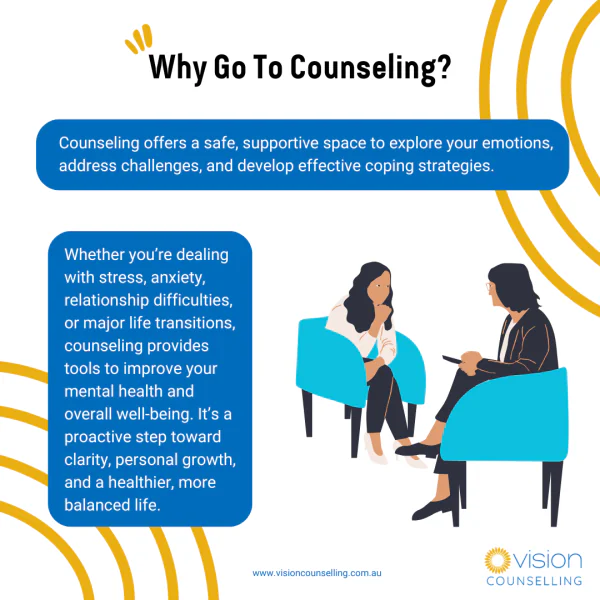
Why People Choose Counseling
Counseling is a powerful way to address emotional, mental, and relational challenges. Here are some of the most common reasons people decide to seek professional support:
1. Managing Stress and Anxiety
Life’s pressures can become overwhelming, leading to persistent stress and anxiety. Counseling helps individuals understand their triggers, develop coping strategies, and regain a sense of calm.
Anxiety disorders affect approximately 14% of Australians every year, making it one of the most common mental health conditions (Beyond Blue).
Learn more about anxiety support with Vision Counselling’s Anxiety Counselling Services.
2. Improving Relationships
Relationships are a cornerstone of happiness, but they can also be a source of stress and conflict. Counseling provides a neutral space to address communication barriers, trust issues, and unresolved conflicts, fostering deeper connections.
Discover how couples and relationship counseling can help through our Relationship Counselling Services.
3. Coping with Grief and Loss
The loss of a loved one, job, or significant life change can leave you feeling adrift. Counseling offers a supportive environment to process grief and rebuild your life after loss.
For additional resources on coping with grief, visit the Australian Centre for Grief and Bereavement.
4. Navigating Major Life Transitions
From moving to a new city to starting a family or changing careers, major transitions can create uncertainty and stress. Counseling helps you adapt to change, find clarity, and embrace new opportunities with confidence.
Benefits of Counseling
The benefits of counseling go beyond resolving immediate challenges. Here’s how counseling can transform your mental and emotional well-being:
Gain Clarity and Perspective
Life’s challenges can cloud your judgment, making it hard to see solutions. Counseling offers a structured environment to unpack your thoughts and emotions, helping you gain clarity and a fresh perspective.
Develop Healthy Coping Mechanisms
Counseling provides tools to manage emotions, handle stress, and navigate difficult situations. Techniques like Cognitive Behavioral Therapy (CBT) are particularly effective for developing resilience and reducing symptoms of anxiety or depression.
Research shows that up to 75% of individuals improve significantly through therapy, with many reporting reduced anxiety and better decision-making (American Psychological Association).
Enhance Self-Discovery and Growth
Counseling isn’t just for addressing problems—it’s also for personal growth. By exploring your thoughts, beliefs, and behaviors, counseling helps you uncover your strengths and work toward becoming your best self.
What to Expect in Counseling
If you’ve never attended counseling, you might wonder what happens in a session. Here’s an overview:
Initial Assessment
The first session typically involves discussing your concerns, goals, and personal history. This helps the counselor tailor their approach to your unique needs.
Setting Goals
Together, you’ll identify short- and long-term goals, such as reducing anxiety, improving relationships, or developing coping strategies.
Ongoing Support
Counseling is a collaborative process. Your counselor will provide feedback, introduce practical tools, and adjust techniques to support your progress.
When Should You Consider Counseling?
Here are some signs that counseling might be right for you:
- Persistent feelings of overwhelm, sadness, or stress
- Difficulty communicating or resolving conflicts in relationships
- Struggling with a significant loss or life transition
- Wanting to improve emotional regulation and self-awareness
- Seeking clarity and direction for personal growth
The Importance of Seeking Professional Help
Many people hesitate to seek counseling due to stigma or misconceptions. However, counseling is a proactive step toward emotional well-being and personal growth. It’s a safe, confidential space to explore your feelings, develop strategies, and make meaningful changes.
Over 70% of individuals who attend therapy report significant improvements in their mental health and emotional resilience (American Psychological Association).
Conclusion
Counseling is more than just a way to address life’s challenges—it’s an opportunity to invest in yourself, gain clarity, and build a better future. Whether you’re navigating stress, improving relationships, or seeking personal growth, counseling provides the tools and support you need to thrive.
Start your journey to emotional well-being with Vision Counselling. Contact us today to book a session and take the first step toward a brighter tomorrow.

