
Past relationships can leave lasting emotional wounds, particularly if they involved betrayal, abuse, or unhealthy dynamics. Whether you’ve experienced emotional manipulation, trust issues, or attachment difficulties, healing from relationship trauma is possible. Understanding the impact of past relationships and taking intentional steps toward recovery can help you rebuild trust, self-worth, and emotional resilience.
If you experience persistent emotional distress, fear of intimacy, trust issues, or anxiety related to past relationships, you may have unresolved relationship trauma. Common signs include intrusive thoughts, avoidance of new relationships, emotional numbness, or heightened sensitivity to triggers.
Past relationship trauma can manifest in various ways such as;
Trust Issues: Feeling suspicious or fearing betrayal even when there’s no reason.
Emotional Triggers: Reacting strongly to situations that remind you of past hurt.
Fear of Intimacy: Struggling to open up emotionally or physically.
Self-Doubt: Questioning your worth or feeling unlovable due to past experiences.
Conflict Avoidance or Overreaction: Either shutting down during disagreements or becoming overly defensive.
These experiences may also present in a new relationship if past trauma has not been addressed.
Seeking support through counselling can help you process past experiences and build healthier future relationships.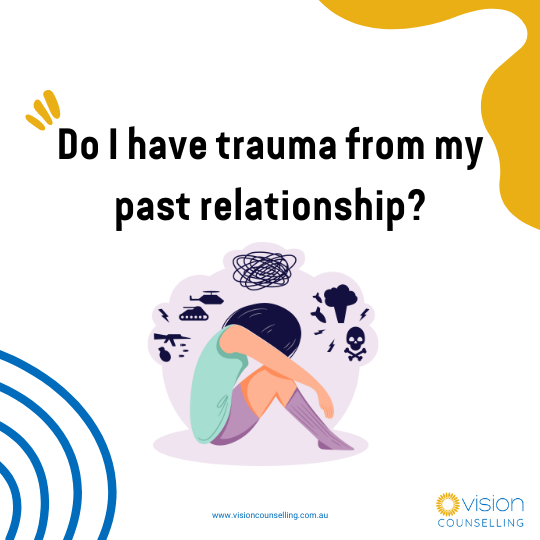
What is Past Relationship Trauma?
Relationship trauma occurs when past experiences negatively affect your emotional well-being and future relationships. It can stem from various circumstances, such as:
- Emotional or psychological abuse – Gaslighting, manipulation, or persistent criticism that affects self-esteem.
- Physical or verbal abuse – Aggressive behaviour or harmful communication.
- Betrayal and infidelity – The loss of trust due to dishonesty.
- Narcissistic or toxic relationships – Being controlled or emotionally drained.
- Codependency – Prioritizing another’s needs at the expense of your own emotional well-being.
According to the American Psychological Association (APA), relationship trauma can lead to post-traumatic stress disorder (PTSD)-like symptoms, anxiety, depression, and difficulties forming healthy relationships in the future.
Signs of Unresolved Relationship Trauma
Recognizing the signs of past relationship trauma is an essential step toward healing. Common indicators include:
✅ Difficulty trusting others – Fear of betrayal or being hurt again.
✅ Fear of abandonment or rejection – Anxiety over losing close connections.
✅ Emotional numbness or detachment – Suppressing emotions to avoid pain.
✅ Recurring patterns of unhealthy relationships – Feeling drawn to toxic or emotionally unavailable partners.
✅ Low self-esteem or self-doubt – Internalizing past criticisms or mistreatment.
✅ Hypervigilance or overanalyzing situations – Constantly assessing interactions for potential threats.
If you recognize these patterns in yourself, seeking professional support can help you navigate your healing journey.
How to Heal from Relationship Trauma
Healing from relationship trauma takes time and effort, but it’s possible to rebuild your emotional well-being and develop healthier relationship patterns. Here are some essential steps to begin your recovery process.
1. Acknowledge and Validate Your Experience
The first step toward healing is recognizing that what you went through was significant. Many people downplay their experiences or blame themselves, but it’s essential to validate your emotions. Trauma affects everyone differently, and acknowledging your pain is the first step toward recovery.
📌 Tip: Consider journaling your experiences and emotions to gain clarity and begin processing past pain.
2. Challenge Negative Thought Patterns
Relationship trauma often leads to negative self-beliefs such as:
❌ “I’m not worthy of love.”
❌ “I’ll never be able to trust anyone again.”
❌ “Every relationship will end badly.”
These thoughts can be deeply ingrained, but cognitive-behavioral therapy (CBT) techniques can help challenge and reframe them. If you’re struggling with these patterns, seeking support from a professional counsellor can be incredibly beneficial.
💡 Related Reading: How Does Counselling Help Anxiety?
3. Set and Enforce Healthy Boundaries
If past relationships lacked boundaries, learning to set them is key to protecting your emotional well-being. Boundaries can include:
- Limiting contact with toxic individuals.
- Expressing your needs openly in relationships.
- Saying “no” without guilt or fear of rejection.
📌 Tip: If you find boundary-setting difficult, assertiveness training or working with a therapist can help you develop these skills.
4. Engage in Self-Care and Mindfulness
Self-care is essential for emotional healing. Prioritizing activities that nurture your mental and physical health can help restore your sense of self-worth. Consider:
- Mindfulness and meditation – Apps like Headspace and Calm offer guided sessions for emotional healing.
- Exercise and movement – Physical activity can reduce stress and boost mood.
- Creative expression – Art, music, or writing can help process emotions in a safe way.
📌 Tip: The Mindfulness-Based Stress Reduction (MBSR) program offers evidence-based mindfulness techniques for emotional resilience.
5. Seek Professional Support
Working with a counsellor or psychologist can provide the guidance needed to heal from past relationship trauma. Therapy approaches that may help include:
- Cognitive-Behavioral Therapy (CBT): Helps reframe negative thoughts and behavioral patterns.
- Eye Movement Desensitization and Reprocessing (EMDR): Used for trauma recovery.
- Somatic Therapy: Focuses on releasing trauma stored in the body.
If you’re in Australia, consider reaching out to Vision Counselling for professional support.
💡 Related Reading: What is Somatic Therapy for Trauma?
6. Take Your Time in Future Relationships
After experiencing relationship trauma, re-entering the dating world can be intimidating. It’s okay to take things slowly and set your own pace. Signs that you may be ready for a new relationship include:
✅ Feeling emotionally stable without needing validation from others.
✅ Trusting yourself to set and maintain boundaries.
✅ Being able to communicate openly about your needs and expectations.
📌 Tip: If dating feels overwhelming, consider speaking to a therapist about attachment styles and relationship patterns.
Final Thoughts
Healing from past relationship trauma is a journey, but with time, self-awareness, and support, you can regain trust in yourself and others. By prioritizing self-care, setting boundaries, and seeking professional help when needed, you can move forward with confidence and build fulfilling, healthy relationships.
If you need support, speaking with a professional counsellor can provide personalized strategies to help you heal.
Where to Get Help
🔹 Vision Counselling – Book a Session
🔹 Lifeline Australia – 13 11 14 (24/7 Crisis Support)
🔹 Beyond Blue – 1300 22 4636 (Mental Health Support)
🔹 Headspace (for young adults) – www.headspace.org.au

