
You’re sitting next to your partner, yet it feels like you’re worlds apart. The conversations are surface-level, the silences are longer, and the warmth that once existed now feels… distant. Sound familiar?
Emotional disconnection is one of the most common reasons couples seek relationship counselling—and one of the most misunderstood. While many people look for more obvious issues like cheating or constant fighting, it’s this quiet drift that can be the real red flag.
Emotional disconnection happens when partners stop sharing feelings, thoughts, or intimacy, leading to a sense of distance or loneliness in the relationship. It can quietly grow over time and often signals the need for reconnection or counselling support.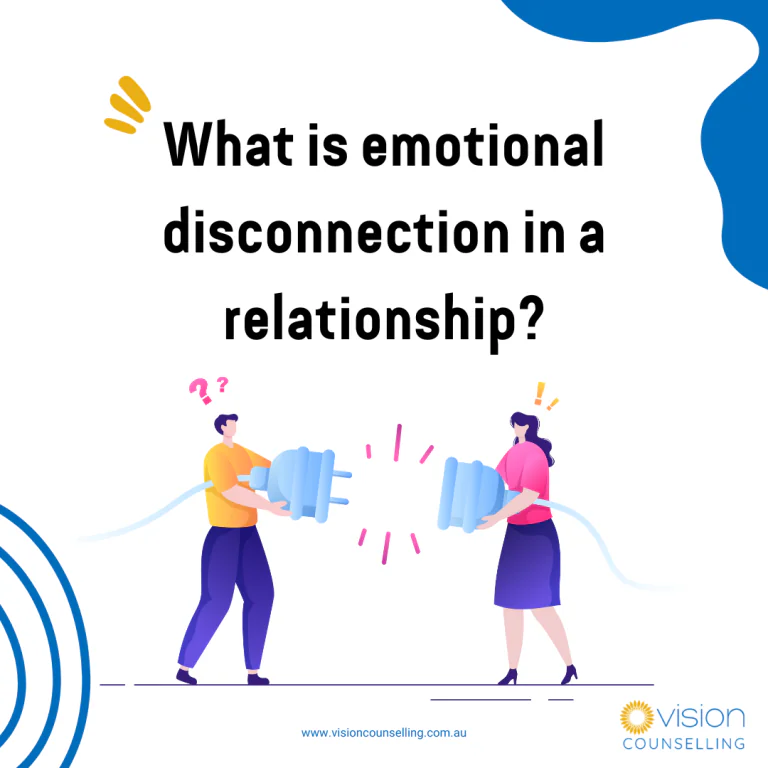
What Is Emotional Disconnection?
Emotional disconnection is the gradual erosion of emotional intimacy between partners. It can feel like:
- Talking without really communicating
- Being in the same room but not feeling seen
- Avoiding vulnerability to “keep the peace”
- Feeling more like flatmates than lovers
This form of detachment doesn’t always result from a specific event. Sometimes, it’s the slow accumulation of stress, life changes, or simply not making time for each other.
Why It Matters More Than You Think
According to relationship psychologist Dr. John Gottman, couples who stop turning toward each other emotionally are more likely to separate than those who argue regularly. It’s not conflict that kills connection—it’s indifference.
Emotional disconnection can:
- Increase feelings of loneliness, even within the relationship
- Lead to resentment, withdrawal, or infidelity
- Undermine trust, safety, and shared purpose
- Create communication breakdowns
Left unchecked, disconnection often snowballs into deeper emotional and relational problems.
Common Causes of Emotional Disconnection
There are many reasons couples start to drift:
- Stress and burnout: Work pressure, parenting, financial stress
- Major life transitions: Moving, career changes, becoming parents
- Unresolved conflict: Avoiding tough conversations builds walls
- Trauma or mental health struggles: Depression or anxiety can reduce emotional availability
- Technology and distraction: Screen time often replaces quality time
Understanding the why behind the disconnect is a crucial first step to repair.
Signs You Might Be Emotionally Disconnected
You may be emotionally disconnected if:
- You rarely have deep or meaningful conversations
- Affection has dwindled or feels mechanical
- You feel misunderstood or emotionally unsupported
- You’d rather talk to friends or coworkers about your feelings
- You argue about logistics, but never about feelings
If you’re feeling more like roommates than romantic partners, it’s time to pay attention.
How to Rebuild Connection
Reconnection is absolutely possible, but it requires intention and effort from both partners. Here’s how:
1. Start with Small Moments of Connection
Make eye contact. Say “thank you.” Ask “How was your day?” and really listen. These micro-moments matter.
2. Set Aside Quality Time (No Screens)
Prioritise regular date nights, walks, or coffee catchups—just the two of you, without distractions.
3. Speak Emotionally, Not Logistically
Try saying “I feel lonely when we don’t talk” instead of “You never talk to me.” Shift from blame to vulnerability.
4. Seek Relationship Counselling
At Vision Counselling, our experienced therapists provide a neutral space where both partners can explore what’s not being said and learn to communicate effectively.
Relationship counselling isn’t just for couples in crisis—it’s for couples who want to reconnect before it’s too late.
Final Thoughts
Emotional disconnection often creeps in silently—but it speaks volumes about the health of your relationship. If you’re feeling distant from your partner, don’t wait for things to “get bad enough.” The earlier you seek support, the better your chances of rebuilding closeness and mutual understanding.
Remember: A strong relationship isn’t one without struggle, but one where both people are willing to reconnect and grow.
💬 Ready to reconnect and rebuild your relationship?
At Vision Counselling, our experienced counsellors are here to help couples navigate emotional disconnection, improve communication, and restore closeness.
Book a confidential session today and take the first step toward a stronger, more connected partnership.
👉 Book Now

