
“She never has to think about what needs packing for the kids’ lunch.”
“He wouldn’t know when the dog’s vaccinations are due if I didn’t remind him.”
“I feel like the project manager of our entire life.”
These are the quiet frustrations we hear in counselling rooms every week. They’re often said with a half-laugh, but behind the words lies something deeper: emotional exhaustion. And it has a name — the mental load.
In many relationships, one partner (often—but not always—a woman) becomes the default keeper of logistics, responsibilities, and planning. It’s an invisible burden, and over time, it can quietly erode connection, intimacy, and even a sense of self.
What Is the Mental Load?
The mental load refers to the invisible, ongoing cognitive work of managing a household, family, and relationship. It’s not just about doing things—it’s about thinking about doing them:
- Noticing the milk is low
- Remembering to RSVP to the school event
- Anticipating that winter clothes will need replacing soon
- Managing emotional needs across the household
The partner carrying this load often becomes the one who is always thinking ahead, even during supposed downtime. It’s an exhausting, never-ending mental checklist—and it can lead to resentment when it goes unacknowledged or unshared.
Why It Matters in Relationships
When one person carries the bulk of the mental load, it can cause:
- Chronic stress and emotional burnout
- Breakdowns in communication
- Decreased intimacy
- Resentment and emotional withdrawal
And because the load is mostly invisible, the partner not carrying it may be completely unaware of its weight.
According to a 2022 Relationships Australia report, 61% of women said they carry the emotional burden of their household, compared to 32% of men. For many, this imbalance feels less like a partnership and more like unpaid emotional labour.
Mental load imbalances often stem from traditional gender roles, unspoken expectations, or one partner being more attuned to emotional or logistical needs. Over time, this dynamic can become ingrained—unless both partners consciously work to recognise and rebalance responsibilities.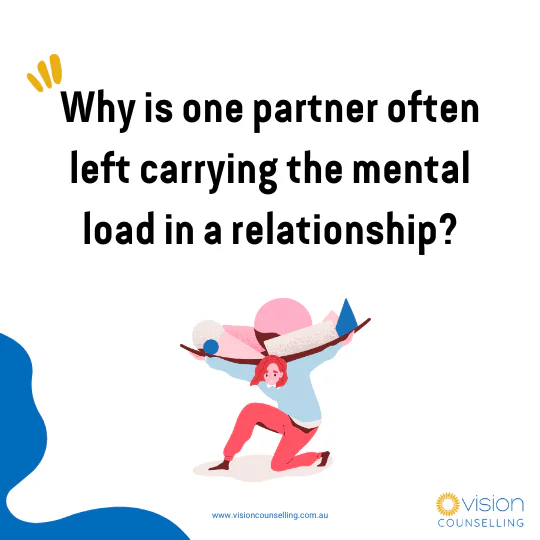
Signs One Partner Is Carrying the Mental Load
You or your partner might be carrying the mental load if:
- You’re the one who always remembers birthdays, appointments, or school activities
- You need to ask for help—but no one else anticipates what needs doing
- You feel like you can’t “switch off,” even when relaxing
- You’re often thanked for what you do, but not for what you carry mentally
- You find yourself saying, “It’s just easier if I do it”
Left unaddressed, this imbalance can turn into chronic disconnection.
How to Start Sharing the Load
Rebalancing the mental load isn’t about making a to-do list—it’s about shifting awareness, ownership, and teamwork. Here’s how:
1. Acknowledge It Exists
Start by naming it. Many couples don’t realise there’s an imbalance until one person finally burns out. Open a conversation with honesty, not blame.
Try: “I feel like I’m constantly thinking ahead for us—meals, bills, everything. It’s making me feel stretched and unseen.”
2. Shift from Helping to Ownership
A partner who “helps” is still waiting to be asked. True balance comes when both partners take initiative, anticipate needs, and share mental responsibility.
3. Divide Roles Based on Strengths
It’s not about 50/50 in every task—it’s about shared mental awareness. If one person handles bills, the other might handle school logistics. Balance the invisible load as well as the visible.
4. Check in Weekly
Have a Sunday night “reset” together. Review the week ahead, check in emotionally, and make sure the load isn’t creeping back onto one person’s shoulders.
When Mental Load Turns into Emotional Distance
Often, clients come to relationship counselling after years of carrying too much—and feeling unseen. The weight of the mental load doesn’t just lead to exhaustion. It chips away at trust, desire, and teamwork.
Counselling provides a neutral space where both partners can hear each other without defensiveness. It allows the partner carrying the load to speak freely—and the other partner to understand their role, often for the first time.
Final Thoughts
The mental load isn’t about laziness or control—it’s about invisible imbalance. Addressing it isn’t just practical; it’s emotional. It says, “We’re in this together.”
If you’re feeling the silent strain of unshared mental labour, you don’t have to carry it alone. A small shift in awareness can lead to big changes in connection.
💬 Struggling with imbalance or burnout in your relationship?
At Vision Counselling, we support couples across Perth to navigate mental load, rebuild emotional connection, and create healthier communication habits.
With multiple locations across Perth and online appointments available, support is closer than you think.
👉 Book your relationship counselling session today and take the next step toward a more balanced, connected partnership.

