
Understanding Their Struggles
Supporting someone with mental health challenges can feel overwhelming. You want to help, but knowing where to start can be difficult. The first step is understanding what they’re experiencing.
Mental health conditions such as anxiety, depression, and stress affect millions of people. According to the Australian Bureau of Statistics, 1 in 5 Australians (20%) will experience a mental health disorder in any given year (source).
Symptoms can range from subtle—such as losing interest in hobbies—to more noticeable behaviours like withdrawing from social interactions or struggling with daily tasks. Mental health conditions are not just “in their head”; they are real and can affect anyone, regardless of age, background, or lifestyle.
One way to be a better support system is to educate yourself on mental health conditions. Reliable sources like Beyond Blue (Beyond Blue) and Black Dog Institute (Black Dog Institute) offer valuable insights.
Be Present and Listen
Sometimes, the best thing you can do is simply be there. You don’t need to have all the answers—your presence, patience, and a listening ear can be incredibly powerful.
How to Offer Meaningful Support:
✅ Listen without judgment. Let them express their emotions without interrupting or trying to “fix” things.
✅ Avoid dismissive phrases like “Just think positively” or “It’s all in your head.” Instead, try: “I hear you, and I’m here for you.”
✅ Ask open-ended questions to encourage conversation: “How are you really feeling?” “What can I do to support you right now?”
✅ Respect their feelings. Even if their emotions don’t seem logical to you, they are real to them.
💡 Did you know? Studies show that active listening helps reduce feelings of loneliness and distress in individuals struggling with mental health issues (source).
Encourage Professional Help
If your loved one hasn’t sought professional help yet, gently encourage them to do so. Speaking to a trained professional—whether a counsellor, psychologist, or therapist—can make a significant difference.
Vision Counselling & Psychology offers support through:
✔ Individual Counselling for depression, anxiety, stress, and trauma → Find a Counsellor
✔ NDIS Counselling for individuals with disabilities and carers → Learn more
✔ Employee Assistance Programs (EAP) for workplace stress → Read about EAP
Many people hesitate to seek help due to stigma or uncertainty. Reassure them that therapy is confidential, effective, and not a sign of weakness.
Offer Practical Support
Small acts of kindness can have a big impact. Mental health struggles can make even everyday tasks feel overwhelming.
Ways You Can Help:
✔ Help with daily responsibilities – Offer to cook, clean, or run errands.
✔ Provide transportation – Drive them to therapy or medical appointments if they feel too anxious to go alone.
✔ Encourage healthy habits – Suggest a short walk, mindfulness exercises, or relaxing activities together.
✔ Check in regularly – A simple text like “Thinking of you today 💙” can be comforting.
💡 Fact: Studies show that social support reduces the risk of worsening mental health symptoms and improves overall well-being (source).
Create a Safe and Supportive Environment
Think of your space as a “safe haven” for your loved one—a place where they feel understood, supported, and free from judgment.
How to Foster a Supportive Environment:
✔ Encourage open conversations about emotions without fear of criticism.
✔ Reduce stress triggers – Avoid toxic discussions, high-pressure situations, or invalidating their emotions.
✔ Be patient – Mental health recovery takes time. Small steps matter.
💡 Helpful Resource: The Stirling Support Program offers free community counselling for those struggling with mental health issues → Learn More.
Take Care of Yourself Too
Supporting someone with mental health struggles can be emotionally draining. It’s important to set boundaries and prioritise your own well-being as well.
Self-Care Tips for Caregivers:
✔ Seek your own support – Talk to a friend, family member, or counsellor about how you’re feeling.
✔ Set boundaries – It’s okay to say, “I care about you, but I need to recharge too.”
✔ Engage in self-care – Exercise, hobbies, meditation, and downtime are essential.
✔ Educate yourself – Read about mental health but don’t take on the role of a therapist.
💡 Remember: You can’t pour from an empty cup. Taking care of yourself helps you support your loved one better.
Keep the Conversation Going
Mental health isn’t a one-time discussion—it’s an ongoing journey. Continue to check in with your loved one, even when they seem to be doing better.
Tips for Ongoing Support:
✔ Ask regularly – “How have you been feeling lately?”
✔ Celebrate small victories – Acknowledge their progress, no matter how small.
✔ Be patient and understanding – Some days will be better than others.
✔ Stay informed – Mental health awareness is always evolving.
Final Thought:
Supporting a loved one through mental health challenges is not about fixing them—it’s about being there for them in the good and bad times. With empathy, patience, and understanding, your support can be a lifeline.
💙 If you or your loved one need support, reach out to Vision Counselling today.
It’s common for people struggling with mental health to resist professional help due to fear, stigma, or lack of motivation. If this happens:
1️⃣ Stay patient and non-judgmental – Avoid forcing them into therapy.
2️⃣ Express concern without pressure – Say, “I care about you and I think talking to someone might help.”
3️⃣ Provide options – Offer to help research therapists or join them at an appointment.
4️⃣ Encourage small steps – A mental health app or a support group might feel less intimidating.
5️⃣ Lead by example – Share your own experiences with therapy or self-care.
💡 If they’re in crisis and at risk of harm, call Lifeline Australia (13 11 14) or seek emergency help.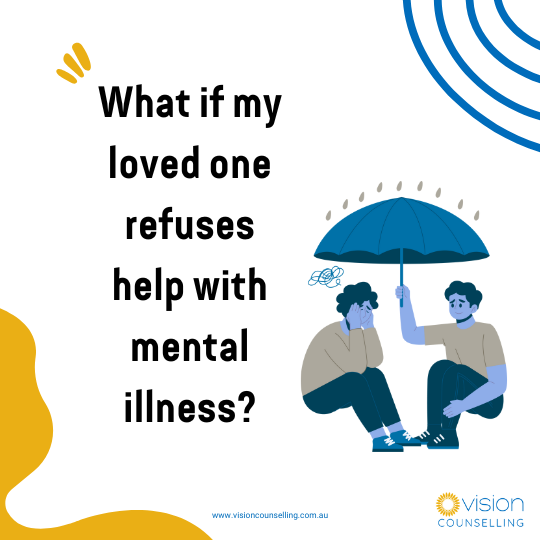
Ready to Make a Difference?
If you’re looking for professional support for yourself or a loved one, Vision Counselling is here to help.
👉 Book an appointment today: Vision Counselling

