
When people seek help for their mental and emotional well-being, the terms counselling and therapy often come up. They are sometimes used interchangeably, but are counseling and therapy actually the same thing? While both involve working with a trained mental health professional to improve mental health, there are distinct differences between the two. Understanding these differences can help you choose the right type of support for your needs.
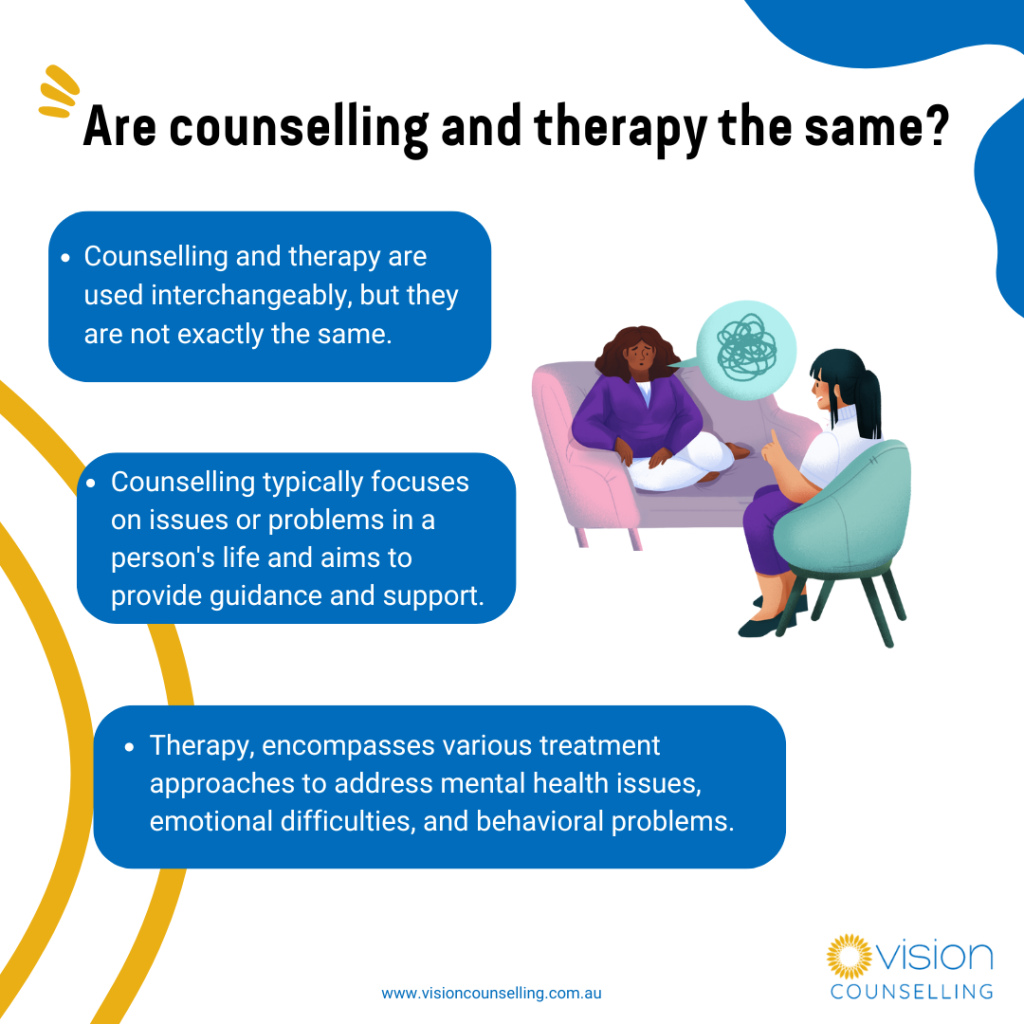
Counselling and therapy are often used interchangeably, but they are not exactly the same. Counselling typically focuses on specific issues or problems in a person’s life and aims to provide guidance and support in dealing with these challenges. Counselling can be short term treatment.
Therapy is a broader term that encompasses various treatment approaches to address mental health issues, emotional difficulties, and behavioural problems. Therapy including psychotherapy can be long term treatment.
Counselling can be seen as a subset of therapy, with therapy offering a more comprehensive and in-depth approach to addressing psychological issues.
Defining Counselling
What is Counselling?
Counselling is typically a short-term, focused form of support aimed at addressing specific life challenges. Counselors help clients develop strategies to cope with immediate concerns such as managing stress, improving communication in relationships, navigating grief, or adjusting to life transitions. In Australia, over 11.5% of adults sought counselling for mental health concerns in the past year, according to the Australian Institute of Health and Welfare.
The Focus of Counselling
Counselling tends to be solution-focused and goal-oriented. The counsellor works with you to set clear objectives for the sessions, and together, you explore practical ways to achieve those outcomes. While counselling may touch on deeper emotional patterns, its primary focus is on resolving present-day issues and improving your ability to handle them. Counselling often involves short-term interventions, typically lasting between 8 to 12 sessions on average and sometimes even less.
Defining Therapy
What is Therapy?
Therapy, also known as psychotherapy, typically involves a deeper exploration of emotional, behavioural, and psychological patterns. Therapy is often long-term and may address complex mental health conditions such as anxiety, depression, trauma, and personality disorders. It’s estimated that 20% of Australians experience mental health issues each year, and therapy is commonly sought for these more persistent conditions.
The Depth of Therapy
Therapists take a broader view of a client’s history and experiences, delving into the underlying causes of emotional distress. The goal of therapy is not just to manage specific symptoms but to work through and resolve deeper issues that may be contributing to ongoing emotional difficulties. Therapy often involves discussing past experiences and internal conflicts that shape current behaviours and emotions. Sessions may span months or even years, depending on the complexity of the issues.
Similarities Between Counselling and Therapy
Although counselling and therapy have their differences, they share many common features. Both involve talking to a mental health professional in a safe and confidential environment, with the aim of improving emotional well-being. A survey conducted by Beyond Blue found that 91% of people who received mental health support (either counselling or therapy) reported feeling better as a result of their sessions.
Both counselling and therapy may use similar techniques such as cognitive behavioural strategies, mindfulness practices, and communication exercises. The professional you work with will provide support, guidance, and a non-judgmental space to explore your thoughts and feelings.
Key Differences Between Counselling and Therapy
The main difference between counselling and therapy lies in the scope of work and the depth of the issues addressed. Here are some key distinctions:
- Focus: Counselling tends to focus on current issues and is often more structured around resolving specific problems. Therapy, on the other hand, addresses deeper emotional or psychological concerns and may involve long-term work.
- Duration: Counselling is usually short-term, with a clear end goal in sight. Therapy can be longer-term, lasting several months or even years, depending on the individual’s needs.
- Depth: Counselling may address surface-level issues and help you develop coping strategies, whereas therapy delves into past experiences and underlying emotional patterns that may be contributing to current difficulties.
- Qualifications: In Australia, counselors may have qualifications in psychology, social work, or counselling. Therapists typically have more advanced training, often holding degrees in psychology, psychotherapy, or psychiatry. Therapists are also more likely to work with individuals experiencing severe mental health conditions. 86% of mental health practitioners in Australia report having postgraduate qualifications.
Choosing the Right Support for You
Choosing between counselling and therapy depends on your personal needs and goals. If you’re dealing with a specific challenge—such as managing work-related stress, dealing with a difficult relationship, or grieving the loss of a loved one—counselling may be a good fit for you. It offers practical strategies and short-term support to help manage immediate concerns.
If you’re struggling with more complex or long-standing issues—such as anxiety, depression, trauma, or unresolved childhood conflicts—therapy may be more appropriate. Therapy provides a deeper exploration of your emotional and psychological world and can help you work through the root causes of your distress.
Conclusion
While counselling and therapy share many similarities, understanding the differences can help you make an informed decision about the type of support that is right for you. Whether you need short-term guidance for a specific issue or long-term support for deeper emotional healing, seeking help is a positive step toward improving your mental health and well-being.
At Vision Counselling, we offer both counselling and therapy services across our various locations in Perth and online. Our qualified team of professionals is here to help you find the support you need to achieve peace, relief, and happiness. Book now to take the first step towards a brighter future.
References
- Australian Institute of Health and Welfare (2021). “Mental health services in Australia.”
- “How Long Does Counseling Last?” Counselling Directory, 2022.
- Australian Bureau of Statistics (2022). “National Study of Mental Health and Wellbeing.”
- Beyond Blue (2020). “Effectiveness of Mental Health Support in Australia.”
- Australian Psychological Society (2022). “Postgraduate qualifications in the mental health profession.”

