
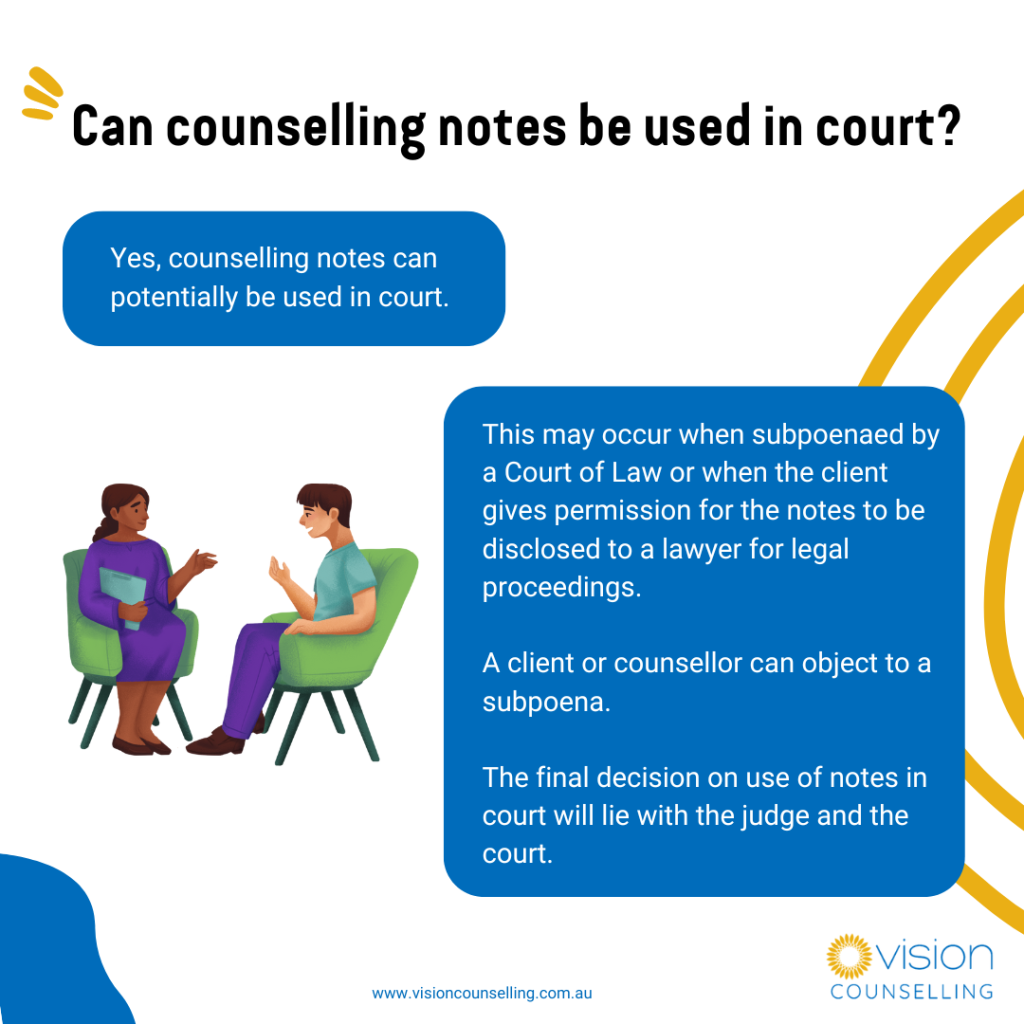
Counselling sessions are considered private and confidential, creating a safe space where clients can openly share their thoughts and emotions. However, many clients wonder whether the notes taken during these sessions can be used in court. The answer can vary based on several factors, including the nature of the legal proceedings, the content of the notes, and the jurisdiction. In Australia, understanding when and how counselling notes may be used in court can provide clarity for both clients and counsellors.
Counselling notes can potentially be used in court, typically when subpoenaed by a Court of Law or when the client gives permission for their disclosure to a lawyer for legal proceedings. While a counsellor or client can object the subpoena and the use of the notes, the final decision on their access and use in court lies with the judge and the court.
Confidentiality in Counselling
What Is Client Confidentiality?
In Australia, counselling is governed by strict confidentiality laws that protect the privacy of clients. This means that anything discussed during a counselling session, including the counsellor’s notes, is kept confidential unless the client provides consent for disclosure. The Australian Psychological Society (APS) and other relevant bodies like the Australian Counselling Association (ACA) enforce these privacy standards for their members to ensure a trusted relationship between counsellor and client.
Exceptions to Confidentiality
While confidentiality is a cornerstone of counselling, there are certain exceptions under Australian law. Counsellors may be required to breach confidentiality if they believe there is an immediate risk of harm to the client or to others, or if they are legally obligated to report child abuse or other criminal activity. These exceptions are in place to protect public safety and welfare.
Legal Context for Counselling Notes in Australia
Can Counselling Notes Be Subpoenaed?
Yes, counselling notes can potentially be subpoenaed in Australia by an Australian Court of Law. A subpoena is a legal order that requires someone to provide evidence or produce documents, such as counselling notes, to the court. This typically happens in cases involving family law, criminal law, or civil disputes, where the court believes the notes may contain information relevant to the case. According to a 2019 survey, over 45% of Australian therapists have reported receiving a subpoena for their records at some point in their careers. However, it’s important to note that this may reflect just a single subpoena over the course of a long career. The amount and frequently of subpoena’s may be dependent on the nature of a therapist’s area of practice.
How Are Counselling Notes Used in Court?
When counselling notes are presented in court, they are typically used to provide insight into the mental health and emotional state of a client. This can be important in cases related to family disputes, child custody, or criminal trials, where the client’s psychological state is a key factor. However, the use of these notes is not taken lightly, and the court will weigh the need for the evidence against the client’s right to privacy.
Client Consent and the Court
Can I Refuse to Have My Notes Used in Court?
As a client, you can object to having your counselling notes used in court, but the final decision rests with the court. Likewise, the counsellor may also object to the use of their notes in court. Australian courts may override your or the counsellor’s objection if the notes are considered crucial evidence. In family law cases, for example, the court prioritizes the best interests of the child, which may lead to the release of counselling notes even if the client does not consent.
What Happens If Counselling Notes Are Disclosed?
If your counselling notes are disclosed to the court, only the information deemed relevant will be used. Counsellors are trained to write their notes objectively, documenting sessions with a focus on facts rather than opinions. These records are typically reviewed in private and may not be shared publicly. In sensitive cases, such as those involving mental health or trauma, the court may place restrictions on how the notes are used and who can access them.
Protecting Your Privacy
How Counsellors Safeguard Client Information
Registered counsellors in Australia are committed to protecting the confidentiality of their clients. Most counsellors will discuss the potential legal limitations of confidentiality at the beginning of the counselling relationship. Clients may also be asked to read and sign a Consent Form with the information and limits around confidentiality. Additionally, counsellors may consult their supervisors and/or legal professionals to ensure they follow the proper protocols when faced with a subpoena or legal inquiry. It’s important for clients to be aware of their rights and discuss any concerns about privacy with their counsellor.
Seeking Legal Advice
If you are involved in a legal matter and are concerned about the potential use of your counselling notes in court, it’s advisable to seek legal counsel. A lawyer can help you understand your rights and guide you through the process of protecting your privacy while complying with the law.
Conclusion
Counselling notes can be used in court under specific circumstances in Australia, though confidentiality remains a fundamental principle of counselling. If your counselling notes are subpoenaed, it is important to understand your rights and the potential implications for your case. Open communication with your counsellor and legal advisor can help you navigate this complex issue while maintaining your mental health and well-being.
At Vision Counselling, we are dedicated to protecting the privacy and confidentiality of our clients, ensuring you can seek support in a safe and secure environment. Book now to start your journey with confidence, knowing your information is in trusted hands.
References
1. Australian Psychological Society (2022). “Code of Ethics and Confidentiality Standards in Counselling.”
2. Australian Counselling Association (2021). “Client Confidentiality and Legal Obligations in Australia.”
3. “Survey of Mental Health Professionals on Subpoenas,” Australian Mental Health Journal, 2019.
4. Family Court of Australia (2020). “Guidelines on the Use of Psychological Evidence in Court.”

