
Unemployment can be a challenging life transition that significantly impacts mental and emotional well-being. When a job is lost, it often affects one’s self-esteem, sense of identity, and daily routine, which can lead to heightened levels of stress, anxiety, and even depression. In this article, we explore how unemployment affects mental health, backed by current statistics, and provide practical strategies for managing these challenges.
Unemployment can significantly impact mental health, leading to increased stress, anxiety, and depression. Losing a job affects not only financial stability but also self-esteem, routine, and sense of purpose. Many individuals experience feelings of isolation, loss of identity, and hopelessness.
The psychological effects can become more severe with prolonged unemployment, highlighting the importance of coping strategies and support during this time. Seeking help through counselling can provide tools to manage these challenges and foster resilience.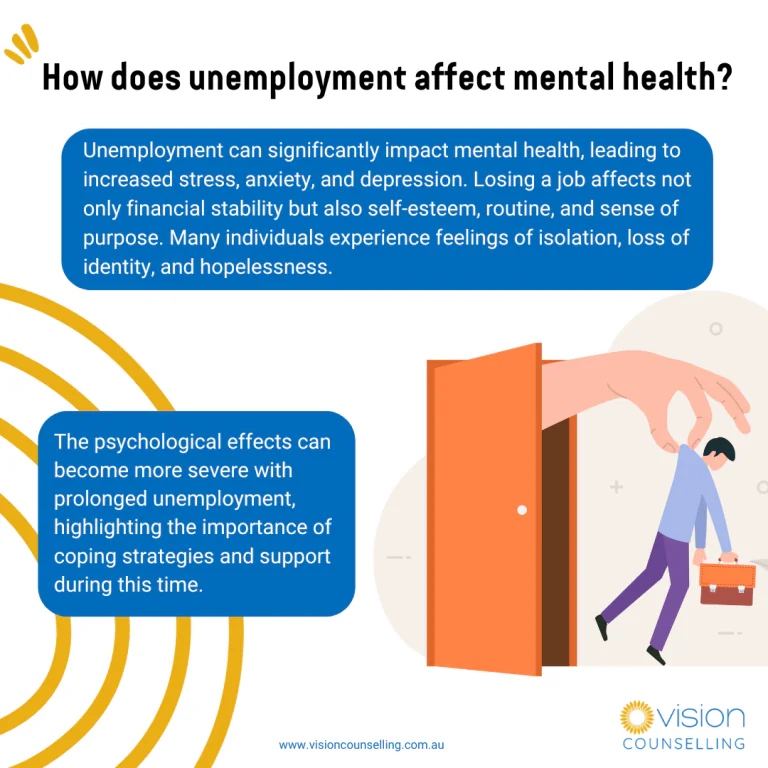
The Mental Health Impact of Unemployment
Unemployment doesn’t just affect financial stability; it has serious implications for mental health as well. A job provides structure, purpose, and social connection, and when these are removed, individuals often face a range of psychological effects. Here are some of the common mental health issues linked to unemployment:
- Increased Anxiety and Stress
The financial strain and uncertainty associated with job loss can lead to high levels of anxiety and stress. A recent study from the University of Sydney highlighted that unemployment and underemployment were significant factors in mental health challenges in Australia (University of Sydney). - Depression and Feelings of Hopelessness
Losing a job can affect self-esteem, leading to feelings of sadness or even depression. The Australian Institute of Health and Welfare (AIHW) reports that the psychosocial stress associated with unemployment has a profound impact on both physical and mental health (AIHW). - Loss of Self-Identity and Purpose
Work is often tied to our identity and daily routine, and losing it can feel like a loss of purpose. This void can lead to emotional struggles and make it difficult to maintain motivation.
Supporting Statistic: According to the Australian Bureau of Statistics (ABS), individuals experiencing long-term unemployment are at a higher risk of developing mental health issues, with anxiety and depression being particularly common (ABS).
Coping Strategies for Managing the Mental Health Impacts of Unemployment
Recognizing the mental health effects of unemployment is the first step toward addressing them. Here are five practical strategies to help manage these challenges and navigate this period effectively:
1. Seek Emotional Support
During this time, reaching out to friends, family, or support groups can provide comfort and perspective. Sharing your experiences can help you feel less isolated. For those seeking professional guidance, counseling can offer structured support to navigate complex emotions. Learn more about our counseling services in Perth.
2. Acknowledge and Process Your Feelings
It’s essential to recognize and validate your emotions during this transition. Writing down your thoughts can help you process feelings like sadness, anger, or frustration. Journaling is also a valuable tool for letting go of negative thoughts and finding a clearer path forward.
3. Establish a New Routine
Creating a daily routine can bring structure back into your life. Incorporate small goals, exercise, and other activities to keep a sense of purpose. The American Psychological Association (APA) notes that routines can counteract the lack of direction often experienced during unemployment, helping individuals maintain mental well-being (APA).
4. Reframe Unemployment as an Opportunity for Growth
Though challenging, unemployment can offer a chance to reassess your goals and skills. Consider what new opportunities might be available, such as exploring a new career path, taking online courses, or learning a new skill. Platforms like LinkedIn Learning and Coursera provide affordable courses to improve employability (LinkedIn Learning, Coursera).
5. Seek Professional Mental Health Support if Needed
If feelings of anxiety or depression become overwhelming, consider reaching out to a mental health professional. Therapists and counselors can offer tailored strategies to help manage stress and maintain emotional balance. Contact Vision Counselling for support in Perth.
Embracing New Opportunities and Moving Forward
While unemployment brings significant mental health challenges, it also provides a unique opportunity to explore new directions. By implementing coping strategies, staying proactive, and seeking support if needed, you can turn this period into a positive phase of personal growth and self-discovery. Remember, support is available, and taking steps to care for your mental health is essential.
References
- Australian Bureau of Statistics. (2023). Labour Force, Australia. Retrieved from https://www.abs.gov.au/statistics/labour/employment-and-unemployment/
- University of Sydney. (2023). Unemployment and Underemployment as Mental Health Risk Factors. Retrieved from https://www.sydney.edu.au/news-opinion/news/2023/07/13/unemployment-and-underemployment-significant-drivers-of-suicide-analysis.html
- Australian Institute of Health and Welfare. The Social Determinants of Health in Australia. Retrieved from https://www.aihw.gov.au/reports/australias-health/social-determinants-of-health
- American Psychological Association. Maintaining Mental Health During Unemployment. Retrieved from https://www.apa.org/

