
In today’s digital age, it’s easy to find ourselves endlessly scrolling through negative news, often without even realizing it. This phenomenon, known as doomscrolling, can have significant effects on mental health, contributing to anxiety, stress, and even depression. But why do we do it, and how can we break the cycle?
In this article, we explore the impact of doomscrolling on mental health, backed by research and expert insights, and share actionable steps to regain control of your screen time.
What Is Doomscrolling?
Doomscrolling (or doomsurfing) refers to the habit of continuously consuming negative or distressing news online, often at the expense of mental well-being. This behavior has become more common with the rise of social media and 24/7 news cycles, particularly during times of crisis, such as the COVID-19 pandemic or global conflicts.
Why Do We Doomscroll?
Psychologists suggest that doomscrolling is driven by a survival instinct—our brain is wired to seek out threats to stay prepared. However, excessive exposure to distressing content can lead to a constant state of worry and emotional exhaustion.
A study published in Health Communication (2022) found that individuals who engage in problematic news consumption experience higher levels of stress and poor mental health outcomes. (Source)
How Doomscrolling Affects Mental Health
1. Increases Anxiety and Stress
Constant exposure to negative news can activate the body’s stress response, releasing cortisol, a hormone linked to increased anxiety and tension. A 2021 study in PLOS ONE found that those who frequently engage with distressing news have significantly higher anxiety levels compared to those who limit their exposure. (Source)
2. Contributes to Depression
Studies have shown that excessive news consumption correlates with symptoms of depression. The American Psychological Association (APA) states that consuming negative content before bed can lead to poor sleep quality, which is a known risk factor for depression. (Source)
3. Creates Feelings of Helplessness
When we are bombarded with negative headlines about climate change, economic instability, and global crises, it can lead to emotional exhaustion and a feeling of powerlessness, making it harder to take positive action.
4. Disrupts Sleep Patterns
Doomscrolling before bedtime can overstimulate the brain, leading to difficulty falling asleep. The blue light from screens also reduces melatonin production, making restful sleep even harder to achieve.
Break the cycle of doomscrolling by setting boundaries on screen time, following reliable news sources, limiting notifications on devices, taking social media breaks, and engaging in offline activities like exercise, reading, or mindfulness practices.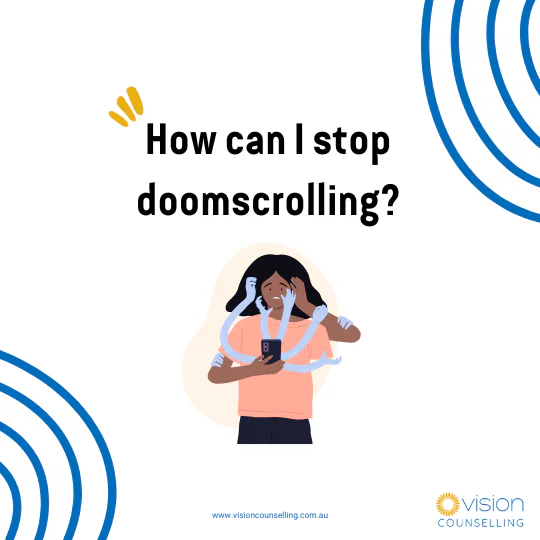
How to Stop Doomscrolling and Protect Your Mental Health
While staying informed is important, setting boundaries around news consumption is essential for mental well-being. Here are some strategies to help:
1. Set Time Limits on News Consumption
Allocate a specific time for reading the news—such as 15-20 minutes in the morning and evening—rather than consuming information throughout the day.
2. Follow Reputable Sources
Misinformation and sensationalized headlines can heighten anxiety. Stick to trusted news outlets like:
- ABC News (Australia)
- BBC News
- World Health Organization for health-related news
3. Use Screen Time Management Apps
Apps like Freedom, Forest, and Apple’s Screen Time can help limit time spent on social media and news apps.
4. Practice Digital Detoxing
Taking regular breaks from screens—especially before bed—can improve mental clarity and emotional balance. Try:
✅ Turning off notifications for news apps
✅ Keeping your phone outside the bedroom
✅ Engaging in offline hobbies like reading or exercise
5. Seek Support if Needed
If doomscrolling is significantly affecting your mental health, speaking to a mental health professional can help.
📍 If you’re struggling with anxiety or depression, consider seeking support through counselling to regain emotional balance and resilience.
Final Thoughts
Doomscrolling can take a serious toll on mental health, contributing to stress, anxiety, depression, and sleep issues. However, by setting healthy boundaries, consuming information mindfully, and seeking professional support when needed, you can break the cycle and regain control of your emotional well-being.
💡 Want to improve your digital habits? Start by reducing screen time and focusing on content that adds value to your life.

