Social Media: Friend or Foe?
We love it, we loathe it — and most of us use it daily. From checking notifications over coffee to scrolling before bed, social media has become woven into modern life. But how does it really affect our mental health?
Let’s take a closer look at the good, the bad, and how to keep your relationship with social media healthy.
The Good: Staying Connected
There’s no denying that social media helps us stay connected. Friends and family scattered across the globe are now just a message or post away. Online communities can help reduce isolation and create belonging — from parenting groups and hobby forums to mental health support pages.
When used consciously, these platforms can foster genuine connection, learning, and even comfort during difficult times.
The Not-So-Good: Comparison and Pressure
But here’s the catch. The same apps that connect us can also harm our self-esteem.
Scrolling through curated images of perfect homes, holidays, or relationships can lead to feelings of inadequacy or self-doubt. It’s the modern version of keeping up with the Joneses — only now, it’s global and 24/7.
The pressure to appear happy, successful, or attractive online can create anxiety and feed perfectionism. For some, this becomes a constant cycle of comparison that undermines confidence and self-worth.
(Learn more about anxiety counselling in Perth.)
The Fear of Missing Out (FOMO)
You’ve probably heard of FOMO — the Fear of Missing Out.
Seeing others attend events, travel, or celebrate achievements can trigger stress, sadness, or envy.
Over time, FOMO can lead to emotional exhaustion and a sense of never measuring up. Studies show that people who spend excessive time on social media may be more prone to loneliness and anxiety【1】.
The Scroll Trap
It’s easy to lose track of time when you’re “just checking one more thing.”
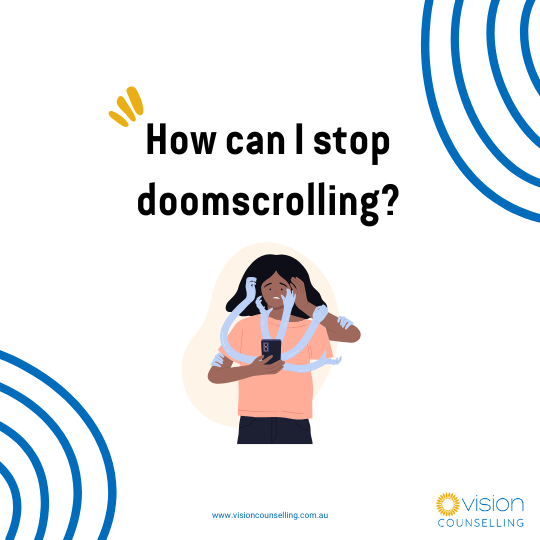
‘Doomscrolling’ — endlessly consuming negative or distressing content — can raise cortisol levels and keep your body in a constant state of stress.
This can make it harder to sleep, concentrate, or unwind. If you’ve ever noticed your mood drop after scrolling, your brain is telling you it’s time for a break.
Setting Boundaries and Taking Control
The goal isn’t to quit social media entirely — it’s to use it in ways that support, rather than sabotage, your mental health.
Try these strategies:
- Set time limits for social media use — especially before bed.
- Unfollow or mute accounts that make you feel anxious or inadequate.
- Follow positive influences — mental health advocates, creative pages, and authentic voices.
- Turn off push notifications to reduce constant distractions.
- Schedule digital detox days to reconnect with real-life activities and relationships.
(Beyond Blue has great advice on managing technology and mental wellbeing.)
The Role of Counselling
If you’re finding it hard to manage your social media habits or the emotions that come with them, counselling can help.
At Vision Counselling, our team supports individuals across Perth and online to build resilience, reduce anxiety, and develop healthy digital habits. Counsellors provide practical tools for stress management, mindfulness, and emotional regulation.
If you notice that scrolling leaves you anxious, irritable, or feeling “less than,” it may be time to reassess your habits. Try tracking how you feel before and after using social media. If it consistently lowers your mood or affects your sleep, consider setting limits or talking to a counsellor.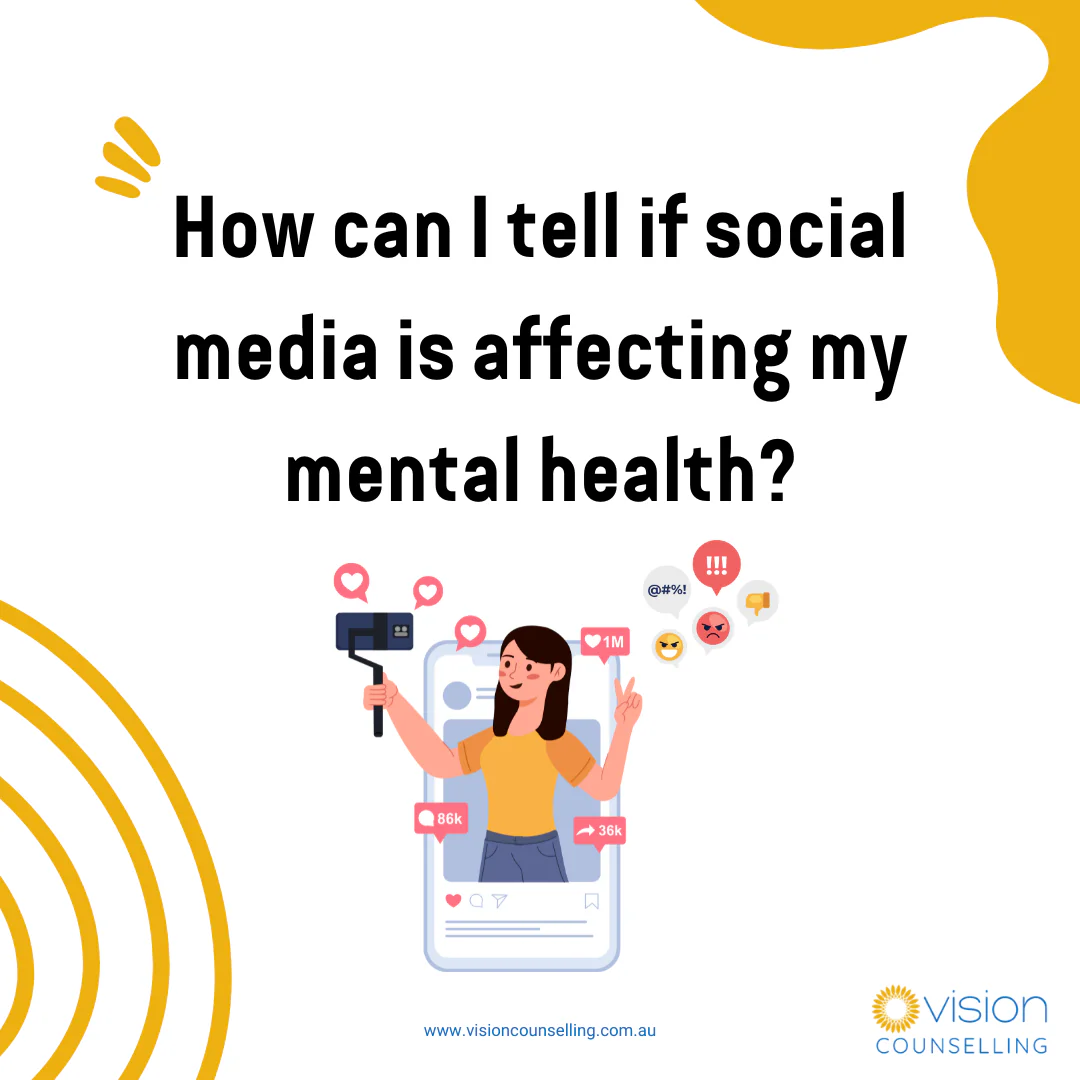
The Bottom Line
Social media itself isn’t the enemy — it’s how we use it that matters.
Used mindfully, it can connect, educate, and inspire us. But unchecked, it can drain our focus and feed self-doubt.
By setting boundaries, curating your feed, and reaching out for support when needed, you can enjoy the benefits while protecting your peace of mind.
If you ever feel overwhelmed, remember that help is close.
📅 Book an appointment with a Perth counsellor — in person or online.
References
- Keles, B., McCrae, N., & Grealish, A. (2020). A systematic review: The influence of social media on depression, anxiety and psychological distress in adolescents. International Journal of Adolescence and Youth, 25(1), 79–93.
- Beyond Blue. (2024). Managing technology and wellbeing. Retrieved from https://www.beyondblue.org.au
- Black Dog Institute. (2024). Social media and mental health. Retrieved from https://www.blackdoginstitute.org.au