
Understanding the Role of Counselling for Students
Students face a variety of challenges during their academic journey, from academic pressure and social dynamics to mental health concerns. Counselling plays a crucial role in supporting students by providing them with a safe space to express their feelings, gain perspective, and develop coping strategies. In Australia, counselling services are increasingly available in schools and universities, recognizing the impact mental health can have on academic success and personal development.
Counselling for students can provide professional support to help them cope with academic, social, and emotional challenges. It plays a crucial role in managing academic pressure, addressing exam anxiety, and enhancing focus on studies. Additionally, it fosters emotional resilience helping students to develop strategies to handle stress, ensuring they are better equipped to succeed both academically and personally.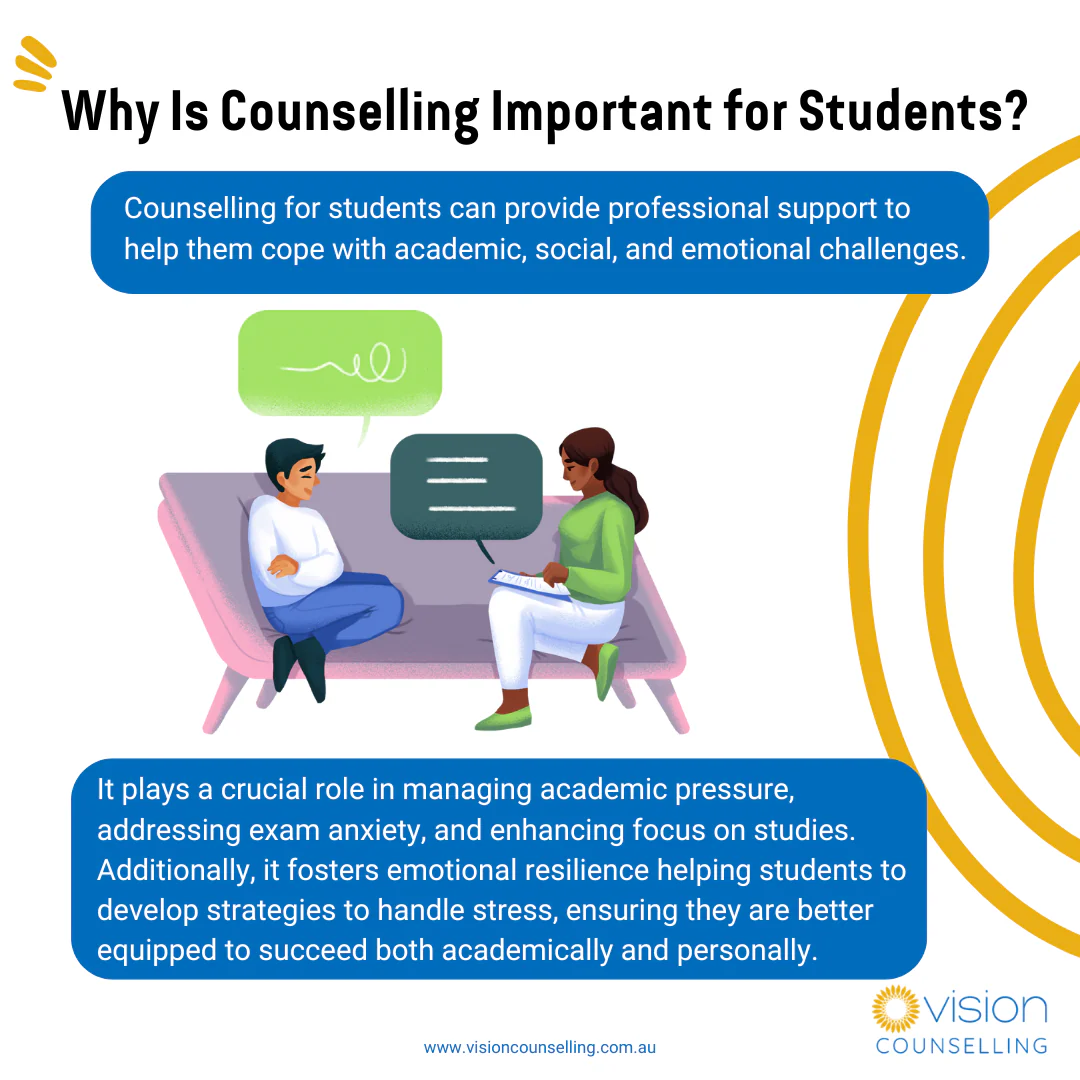
Mental Health Support for Students
One of the primary reasons counselling is important for students is its role in promoting mental health. Adolescence and young adulthood are critical periods for mental well-being, and many students struggle with issues like anxiety, depression, stress, and loneliness. According to a 2020 survey by Mission Australia, around 40% of young Australians aged 15-19 reported feeling stressed or anxious most of the time (source: Mission Australia 2020).
School and university counsellors are trained to help students navigate these challenges, offering techniques to manage stress, improve emotional regulation, and enhance overall mental well-being. Early intervention can prevent minor issues from escalating into more serious mental health problems.
Academic Pressure and Performance
Academic expectations can create significant stress for students. Many students struggle with time management, maintaining focus, and meeting academic deadlines, which can affect both their mental health and academic performance. Counsellors can assist students by helping them develop effective study habits, manage their time better, and balance academic demands with other aspects of life.
A 2019 study by Headspace Australia revealed that more than 60% of students who accessed counselling services reported improved academic performance and motivation after attending regular sessions (source: Headspace 2019). This shows the direct link between mental health support and academic success.
Social and Emotional Development
In addition to academic pressure, students face challenges in social dynamics, including peer relationships, bullying, and feelings of isolation. Counselling can play an essential role in helping students develop healthy social skills and emotional intelligence. By providing a non-judgmental space to discuss their experiences, counsellors help students navigate friendships, resolve conflicts, and build self-esteem.
A 2021 Australian Psychological Society report found that students who participate in school-based counselling programs experience improved social skills, with 65% of students reporting better relationships with peers (source: APS 2021). These skills are essential for success both in school and later in life.
Career and Future Guidance
Counselling doesn’t only focus on mental health and personal issues. For high school and university students, career guidance is another important aspect of counselling. Counsellors can help students explore potential career paths, understand their strengths and interests, and make informed decisions about their future studies or job opportunities.
In Australia, many educational institutions provide access to career counsellors who can assist with everything from choosing subjects to exploring post-graduation options. Students who have access to career counselling are 20% more likely to feel confident about their future career choices (source: Australian Career Development Foundation, 2021).
Coping with Life Transitions
Students often face significant life transitions, such as moving from primary to high school, transitioning from high school to university, or entering the workforce. These changes can be overwhelming and trigger anxiety or fear about the future. Counselling can provide students with tools to manage these transitions and offer reassurance that these feelings are normal.
A report from Beyond Blue highlights that nearly 30% of young Australians find the transition from high school to university or work difficult (source: Beyond Blue 2020). Counsellors help students build resilience and adaptability to cope with these life changes.
Conclusion: The Lifelong Benefits of Student Counselling
Counselling is a valuable resource for students, offering mental health support, academic guidance, and social development. By providing a safe and supportive environment, counselling can help students overcome challenges, improve their mental well-being, and succeed both personally and academically. As Australia continues to prioritize mental health in schools and universities, the importance of accessible counselling services for students cannot be overstated.
References:
- Mission Australia. (2020). Young Australians report on stress and anxiety levels.
- Headspace Australia. (2019). The impact of counselling on student academic performance.
- Australian Psychological Society. (2021). The benefits of school-based counselling for students.
- Australian Career Development Foundation. (2021). Career counselling and student confidence in future decisions.
- Beyond Blue. (2020). Challenges in transitioning from high school to further study or work.

