
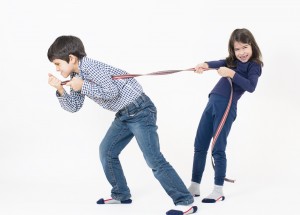
 When a second child comes into your family it is not only a time for celebration but also possibly a time to heave a sigh of relief. At last, a playmate for your first child, a little person to help take the pressure off mummy. They’ll be best friends forever, right?
Maybe, maybe not!
It’s hard to imagine when you are planning your family that two (or more) of your children might not get on with each other. Even if they do get on, most of the time, there may still be times when sibling rivalry rears its stressful head.
Sibling rivalry can be a cause of stress in any family and may involve
- Jealousy
- Poor / naughty behaviour
- Clinging behaviour
- Attempts to monopolise parents time
- Attention seeking behaviour
You may expect the odd squabble, but sibling rivalry can and does sometimes degenerate into physical altercations! This may cause distress for all the family and sometimes interventions like Family Counselling may be needed.
However,
Understanding why sibling rivalry occurs and how it can be managed within the family can reduce the stress that it might otherwise cause.
Why does it happen?
As the parent you are the most important person in your child’s life and sometimes they simply don’t want to share you with another, even if it is their own brother or sister!
Also,
Other things to consider may be
- Differences in ages. Children of different ages have different levels of understanding.
- Perceptions. Your child may perceive that a sibling is getting preferential treatment. This may not be the case but, it is their reality.
- Temperaments. Each child is different with their own temperament and way of reacting to and dealing with any situation.
Although sibling rivalry and some of the behaviours that come with it can cause stress, it’s not all bad. There are some benefits to their behaviour.
They may be learning or building
- Social skills
- Negotiating skills
- How to function in a family/team
- How to compromise
- Turn taking ability
- Conflict resolution
What can I do to help ease?
- Rules. Have family rules and expectations of behaviour, dependent on your child’s age.
- Consequences. Have consequences for unwanted behaviour.
- Model the behaviour you want to see in your children.
- Spend quality time with each child.
- Have routines. Routines give children structure.
- Cool down squabbles however –
- Don’t be overly involved in their interactions as this can increase fighting as a way of getting attention.
If you find, however, that you need some help with the stress caused by sibling rivalry in your family, try talking to a Counsellor or Play Therapist. These health professionals are able to help parents and children with skills to make living in a family easier and happier.
Article Title: Sibling RivalryArticle By: Vision Counselling and Psychology, Perth, Western Australia
Web Address: www.visioncounselling.com.au
Published: 12/09/2015 “Sibling Rivalry” (Raising Children Network), Available:https://raisingchildren.net.au/articles/sibling_rivalry_video.html/context/833 (Accessed: 2014, September 09)
Image Reference: Dollar Photo Club

